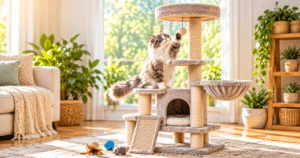
# Cat Trees Give Indoor Cats the Vertical Space They Need to Thrive
Cats need more than food, water, and a litter box to live happy lives indoors. Vertical space matters. Cat trees provide climbing, perching, and scratching surfaces that satisfy natural feline behaviors and keep indoor cats mentally stimulated and physically active.
A quality cat tree addresses several core needs at once. Cats scratch to mark territory, condition their claws, and stretch their muscles. They climb and perch to survey their environment from high vantage points, a behavior rooted in their ancestral need to escape danger and hunt prey. They hide in enclosed spaces to feel secure. Indoor cats confined to floor level miss these outlets. Without proper enrichment, cats develop behavioral problems, gain excess weight, and suffer from anxiety and boredom.
The best cat trees combine multiple features. Look for sturdy construction that won't wobble when a cat jumps or lands on platforms. Materials like sisal rope provide appropriate scratching surfaces and last longer than carpet-wrapped posts. Multiple levels allow cats of different sizes and ages to use the tree simultaneously. Enclosed cubbies or caves offer hiding spots. Hanging toys add interactive play opportunities without requiring human participation.
Height matters too. Taller cat trees give cats more vertical real estate and better sightlines into their home. A tree measuring 5 to 7 feet tall works well for most living rooms and allows cats to reach high perches they naturally prefer. Wider base platforms increase stability and provide more surface area for resting.
Material quality directly affects durability. Particle board bases and low-quality sisal rope deteriorate quickly under regular use. Solid wood frames and high-grade sisal withstand years of scratching, climbing, and lounging. Washable covers on perches simplify maintenance. Premium cat trees cost more upfront but outlast budget options by years.
For cats with specific needs, specialized designs exist. Lightweight trees work for apartments with limited floor space. Wall-mounted shelves create vertical highways without taking up room. Corner units fit neatly into unused spaces. Multi-room designs with tunnels connecting platforms appeal to playful, active cats. Quiet, reserved cats prefer simple towers with solid perches and hiding spots.
Placement affects usage. Position the tree near a window so cats can watch outdoor activity. Locate it in a central living area where the cat spends time, not hidden in a bedroom. Keep the tree away from heat sources and direct sunlight that could warp materials or make the top uncomfortably warm.
Indoor cats spend up to 70 percent of their time resting. A well-designed cat tree becomes their favorite spot. It protects furniture from scratching damage, reduces behavioral problems, and gives cats the vertical lifestyle they evolved to live. Investing in a quality cat tree is one of the most effective ways to support indoor cat wellness and enrichment.