# Foster Cat Proves Working From Home Is Really Just Cat-Sitting in Disguise
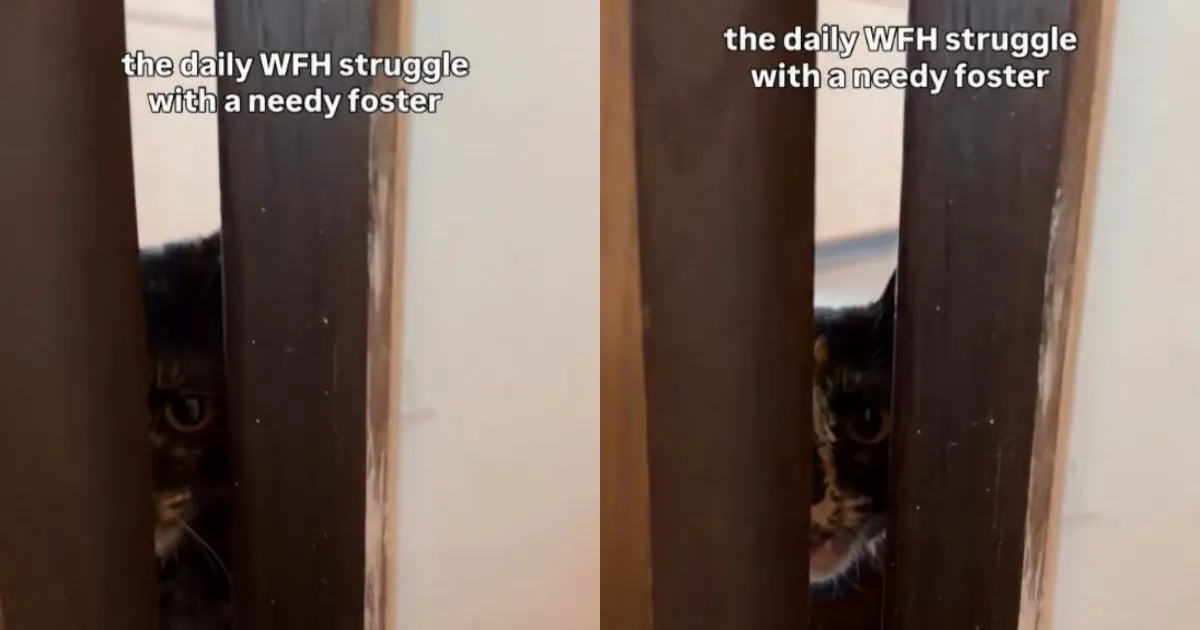
A foster cat named Miffy has become an internet sensation by demonstrating exactly what remote work looks like when a determined feline moves into your home office. The video, shared by the social media account @captainmagnusthecat, shows the persistent tabby with one tiny paw wedged through a barely-open door, meowing insistently each time her foster mom tries to send her away.
The clip captures a moment that resonates with thousands of pet owners who work remotely. Miffy's single-minded focus on gaining access to her foster mother's workspace reveals the reality of sharing a home office with a demanding cat. No matter how firm the boundary or how gently the door closes, the meowing continues. The cat's strategy is simple but effective: persistence, combined with strategic paw placement and the kind of vocalization that makes ignoring her nearly impossible.
Foster care for cats serves as a critical lifeline for shelters and rescue organizations nationwide. Volunteers like Miffy's foster mom provide temporary homes for cats awaiting permanent adoption, helping reduce overcrowding in facilities while giving animals a chance to decompress in a residential setting. Foster cats often struggle with adjustment, stress, and separation anxiety during their transition to shelter life. Many seek constant companionship and reassurance from their caregivers, which explains Miffy's relentless pursuit of her foster mother's attention.
The video's humor masks a real challenge that foster parents face. Cats in temporary homes often bond intensely with their caregivers and struggle when left alone. This behavior, while endearing on camera, reflects the emotional needs of an animal in transition. Miffy's repeated attempts to join her foster mom represent anxiety about separation and a need for security during an uncertain time in her life.
For remote workers fostering cats, the situation requires creative problem-solving. Some solutions include establishing designated quiet hours, creating enrichment activities in separate spaces, using interactive toys to occupy a cat's attention, and gradually building tolerance for alone time. Many foster coordinators recommend working with behaviorists or shelter staff to develop strategies that work for both the human and the cat.
Miffy's viral moment highlights the broader importance of foster networks. Each foster home opens space for another cat to receive rescue care. Without dedicated volunteers willing to open their homes and, yes, their office doors to needy animals, shelter systems would collapse under overcrowding. The emotional labor of foster caregiving extends beyond feeding and litter box maintenance. It includes managing separation anxiety, building confidence, and providing the kind of consistent attention that helps cats become more adoptable.
For anyone considering becoming a foster parent for cats, Miffy's story offers an honest preview. Working from home while fostering means embracing interruptions, managing demanding attention-seeking behavior, and accepting that productivity may take a backseat to feline needs. It also means knowing that the temporary inconvenience serves a purpose much larger than any work deadline.
The video serves as both entertainment and advocacy. As Miffy's paw reaches through that door gap one more time, she makes an unspoken case for why foster cats deserve homes, why shelters need more volunteers, and why working from home with a foster cat isn't actually about work at all. It's about cat-sitting, pure and simple.