# Cat Personality Differences: Why Your Male and Female Cats Act Nothing Alike
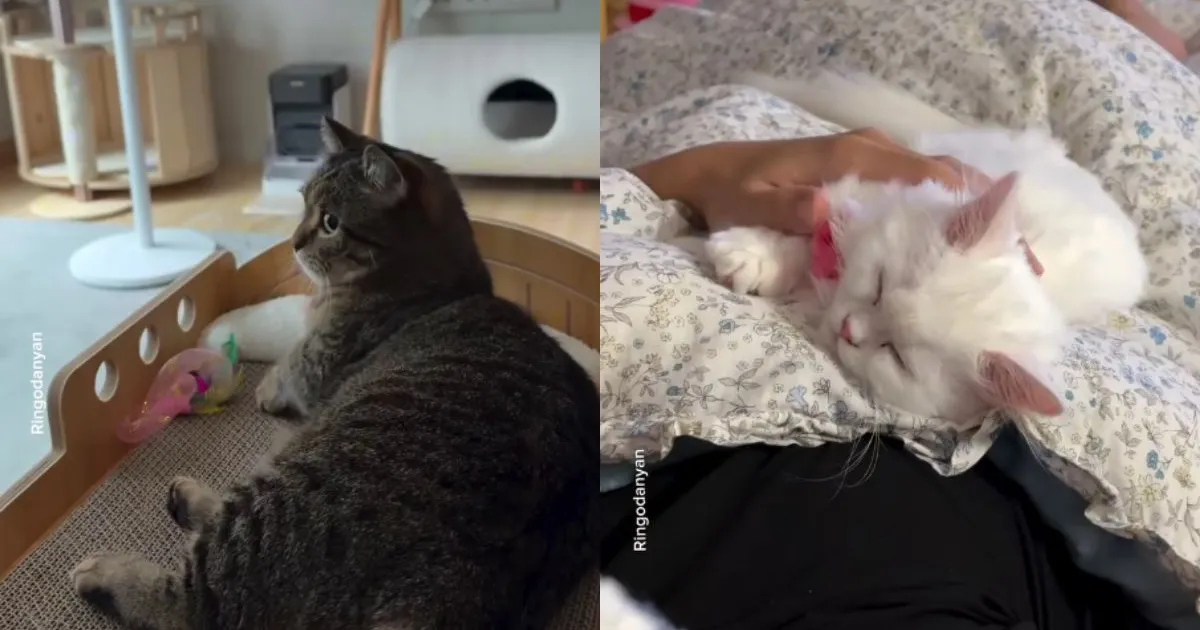
A viral video from @ringodanyan on social media captures something every multi-cat household recognizes instantly. Mango, the female cat, snuggles contentedly against her owner, purring through kisses and cuddles while soaking up affection. Cut to Ringo, the male cat, and the dynamic flips entirely. Where Mango melts into her dad's arms, Ringo delivers the cold shoulder, pushing boundaries and reminding his owner that he operates on his own terms.
This playful contrast between Mango and Ringo illustrates a real phenomenon that veterinarians and cat behaviorists observe regularly. While individual personality matters far more than sex alone, research shows measurable behavioral patterns between male and female cats.
Female cats, particularly after spaying, often gravitate toward selective bonding with their chosen humans. They tend to be more reserved with strangers but intensely affectionate with their preferred people. This selectivity can feel rewarding to owners who earn a cat's trust, since the affection feels earned rather than automatic. Spayed females typically exhibit lower territorial aggression and more predictable behavior patterns than their male counterparts.
Male cats present a different profile. Neutered males frequently display more independent streaks and less consistent affection patterns. They may seek attention on their own schedule rather than their owner's, and they often maintain that aloof demeanor that defines feline coolness. This independence, while sometimes frustrating to owners craving constant cuddles, actually reflects healthier boundaries and a cat's natural need for autonomy.
Hormones influence these patterns significantly. Before spaying or neutering, behavioral differences intensify. Intact female cats experience estrous cycles that create mood swings and unpredictable behavior. Intact males mark territory aggressively, roam widely, and display increased dominance behaviors. Spaying and neutering calm these impulses substantially, but underlying personality traits persist.
The video's appeal lies in its relatability. Cat owners with mixed-sex households frequently experience exactly this dynamic. One cat becomes a devoted lap warmer while the other maintains independence, strutting past their owner with dignified indifference. Neither approach is wrong. Both behaviors reflect normal feline personality variation.
What matters most for cat owners is understanding their individual cat's needs rather than projecting expectations based on sex. Mango clearly thrives on physical affection and closeness, while Ringo likely prefers play-based interaction, proximity on his terms, or parallel companionship where he sits nearby without demanding cuddles. Forcing affection on a Ringo-type cat typically backfires, creating avoidance behavior and eroding trust.
The lesson from @ringodanyan's household applies universally. Successful cat ownership means reading each animal as an individual, respecting their preferred interaction style, and celebrating the unique relationship you build with each cat. Whether your cat showers you with affection like Mango or maintains the dignified distance Ringo prefers, both pathways lead to genuine bonds. The key rests in acceptance rather than expectation.