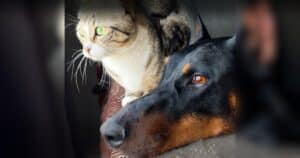
# Kitten Raised by Doberman Adopts Canine Behaviors
A kitten raised by a Doberman Pinscher has begun displaying distinctly dog-like habits, demonstrating how cross-species socialization shapes feline behavior during critical developmental stages.
The kitten, adopted into a household where a Doberman serves as the primary caregiver, has absorbed behaviors typical of dogs rather than cats. Young cats learn social cues and behavioral patterns from their environment, and when that environment centers on canine companionship, the results can be striking.
During the first weeks and months of life, kittens undergo critical socialization periods. This window typically spans from birth through approximately 16 weeks. During this time, the kitten's brain actively absorbs patterns from surrounding animals and humans. Exposure to different species during this developmental phase shapes lifelong behavior, communication styles, and social preferences.
The Doberman Pinscher, a large working breed known for loyalty and intelligence, has apparently taken on a nurturing role with the kitten. Rather than predatory behavior, the dog has provided comfort and companionship. The kitten now mimics some of the dog's mannerisms.
Kittens naturally learn from their social group, whether that group consists of other cats, humans, or dogs. A kitten raised primarily with a Doberman would observe and replicate the dog's body language, play styles, and interaction patterns. This cross-species learning happens because young animals are highly adaptable and seek to fit into their social structure.
Examples of dog-like behavior in the kitten might include changes in play style, vocalization patterns, or social bonding behaviors. Cats raised with dogs sometimes display more direct engagement and less of the independent behavior typical of feline-only households. Some kittens adopt pack-like mentality from their canine companions.
This phenomenon highlights neuroplasticity in young animals. The feline brain remains flexible during early development, allowing new behavioral patterns to establish. Once these patterns become ingrained, they persist into adulthood.
The relationship also reflects the Doberman's temperament. This breed shows remarkable patience and protective instincts, traits that extend to smaller animals in their care. Dobermans bred as family companions often display gentle behavior toward vulnerable creatures.
Pet owners considering cross-species households should understand these dynamics. A young kitten introduced to a calm, stable dog during critical socialization periods will likely bond strongly with that dog. The kitten's behavioral development will incorporate canine elements.
This arrangement works best when the dog shows consistent, gentle behavior and when the kitten experiences regular positive interactions. Proper supervision ensures the kitten remains safe while building confidence around the larger animal.
The story serves as a reminder that animal behavior emerges from environmental influence and early experience. A kitten's personality and habits reflect not just feline genetics, but the specific social world into which they are born. In this case, that world is decidedly canine.