# House Cats Bred to Look Like Wild Predators: What You Should Know
Several domestic cat breeds now exist that replicate the appearance of wild felines, offering people the look of exotic cats without the danger or legal complications of owning actual leopards, cheetahs, bobcats, or lynx. These breeds represent decades of selective breeding aimed at capturing the spotted coats, muscular builds, and distinctive features of their wild counterparts.
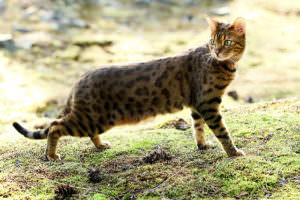
The Bengal stands out as perhaps the most recognized wild-looking domestic cat. Breeders developed Bengals by crossing domestic cats with Asian Leopard Cats (Prionailurus bengalensis), a small wild species. The result is a cat with a leopard-like spotted or marbled coat, a lean athletic body, and the same grace as its wild ancestor. Bengals retain an active, playful nature and require significant mental and physical stimulation to thrive in home environments. Their intelligence and energy levels differ markedly from typical house cats.
The Egyptian Mau takes its inspiration from the ancient spotted cats depicted in Egyptian art and mummified remains. This breed features a naturally spotted coat, a sleek muscular frame, and the characteristic gooseberry-green eyes. Egyptian Maus are smaller and more delicate than Bengals but equally athletic. They reach speeds up to 30 miles per hour and bond intensely with their owners, sometimes showing shyness around strangers.
The American Bobtail mimics the bobcat through its distinctive short or curled tail, tufted ears, and often spotted or tabby coat pattern. These medium to large cats carry the wild appearance while maintaining friendly, dog-like personalities. They adapt well to family life and show remarkable patience with children. Their bobbed tails result from a natural genetic mutation that breeders selectively emphasized.
The Highland Lynx brings together multiple wild cat features, including the ear tufts and facial structure of lynx species, the muscular build of larger wild cats, and polydactyl paws (extra toes). Highland Lynx cats come in various coat patterns, often spotted or striped. Despite their fierce appearance, they develop strong bonds with human families and tolerate handling well.
These specialized breeds demand particular care considerations. Bengals and Egyptian Maus need more space, vertical territory, and enrichment than standard domestic cats. They require interactive play sessions daily and respond well to training with clickers and treats. Some Bengals possess an unpredictable prey drive that makes them unsuitable for homes with small animals.
Housing regulations affect ownership too. Some municipalities classify Bengals and other early-generation hybrids as wild animals, requiring special permits or prohibiting ownership outright. First-generation Bengals (F1) and second-generation Bengals (F2) face stricter regulation than later generations, which contain less wild ancestry.
Prospective owners should understand that while these cats look wild, they remain domesticated animals with standard veterinary needs. Their temperaments vary individually, and purchasing from responsible breeders who health-test their breeding cats reduces inherited health problems. Breed-specific rescues exist for each of these types, offering alternatives to buying from breeders.
These wild-looking domestic cats appeal to people drawn to feline predators but unable or unwilling to keep true wild animals. They bridge the gap between the average tabby and the untamable leopard, delivering exotic aesthetics with domestic compatibility.