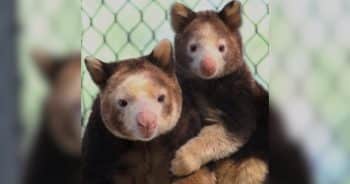
# Tree Kangaroos: Meet Nane, One of Nature's Most Unusual Marsupials
Tree kangaroos rank among Earth's most remarkable animals. These marsupials combine the muscular build of ground-dwelling kangaroos with the climbing abilities of primates, creating a truly unique creature. Nane represents one individual living in captivity, offering the public a rare glimpse into the world of these endangered species.
Tree kangaroos exist only in the rainforests of Australia, Papua New Guinea, and Indonesia. Unlike their cousins who hop across grasslands, tree kangaroos have evolved shorter hind legs and longer, more flexible bodies suited for life in the canopy. Their long tail acts as a counterbalance, helping them navigate thick branches with surprising grace. Their front limbs grew stronger and more versatile than ground kangaroos, essential for gripping bark and climbing vertical trunks.
The genus contains roughly ten species, each adapted to specific forest environments. Goodfellow's tree kangaroo, Dendrolagus goodfellowi, and the Lumholtz's tree kangaroo, Dendrolagus lumholtzi, represent the most commonly encountered species in zoos and wildlife programs. These marsupials can weigh between 7 and 18 pounds, depending on species, making them considerably smaller than their terrestrial relatives.
Nane's presence in a facility serves multiple purposes beyond entertainment. Zoos and wildlife sanctuaries use tree kangaroos for educational programs that teach visitors about rainforest ecology and marsupial biology. Many facilities participate in Species Survival Plans, or SSPs, which carefully manage captive populations to maintain genetic diversity. This work becomes increasingly vital as habitat loss threatens wild populations.
Tree kangaroos face serious conservation challenges. Rainforest destruction in Southeast Asia continues at alarming rates as logging operations and agricultural expansion fragment their habitat. Hunting pressure also affects wild populations in some regions. Several species now carry conservation status designations ranging from vulnerable to endangered, making captive breeding programs essential components of long-term survival strategies.
The dietary needs of tree kangaroos differ from ground-dwelling kangaroos. In the wild, they consume leaves, bark, unripe fruit, and vegetation found in the forest canopy. Captive animals require carefully balanced diets that replicate this herbivorous intake. Zoo nutritionists work with veterinarians to ensure animals like Nane receive proper nutrition that supports their unique physiology.
Meeting tree kangaroos like Nane changes how people understand marsupial diversity. Most people think of kangaroos as desert creatures bouncing across open plains. Tree kangaroos shatter this assumption, demonstrating the remarkable adaptability of marsupials across different ecosystems. This educational value helps build support for rainforest conservation efforts.
Public interaction with animals like Nane generates funding and awareness for wild population research. Money spent on zoo visits often contributes to field studies in Australia and Papua New Guinea, where scientists track wild tree kangaroo populations and work with local communities on habitat protection initiatives.
For pet owners interested in exotic wildlife, tree kangaroos remind us that truly wild animals belong in specialized facilities rather than homes. Their complex needs, specialized diets, and space requirements make them entirely unsuitable as companions. Learning about Nane and other tree kangaroos cultivates appreciation for the incredible diversity of animal life and the importance of supporting conservation through responsible wildlife education.