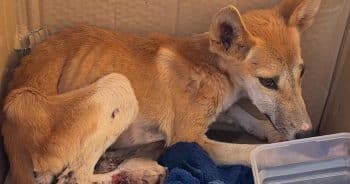
# Rescued Dingo Puppy Overcomes Starvation and Broken Leg to Find Safety
A dingo puppy in Australia survived weeks alone in the wild with a fractured leg, eating insects and scraps while evading danger. The young animal now receives care from a specialized wildlife rescue organization after being discovered in critical condition.
The puppy, whose exact age remains unclear from initial reports, endured severe malnutrition and untreated injury before rescue workers located him. Dingoes are wild canids native to Australia, distinct from domestic dogs, and this puppy faced the additional challenge of being orphaned without pack support during a vulnerable developmental stage.
Dingoes differ fundamentally from domesticated dogs in behavior, physiology, and survival needs. These wild canines typically live in packs and teach young members how to hunt and navigate their environment. A solitary dingo puppy lacks this critical guidance and protection. The broken leg would have severely limited his mobility, making hunting impossible and leaving him dependent on whatever food scraps he could locate or insects he could catch.
The puppy's discovery marks a rare intervention in wild dingo populations. Australia's relationship with dingoes remains complex. While they occupy an ecological niche as apex predators in many regions, livestock farmers often view them as threats. This puppy's rescue demonstrates the compassionate response that can occur when individual animals are found in distress.
Wildlife veterinarians now treat the puppy's fracture and assess the damage caused by prolonged malnutrition. Broken bones in young animals typically heal faster than in adults, but the puppy's weakened state from starvation complicates recovery. Veterinary staff will monitor for secondary infections, nutritional deficiencies, and behavioral trauma from his ordeal.
The rescue raises questions about what comes next. Unlike domestic dogs, dingoes cannot be simply placed in homes or traditional animal shelters. The puppy will likely require long-term care from facilities experienced with wild canines. Some Australian wildlife organizations maintain dingo sanctuaries where rescued individuals can live in semi-natural conditions.
If the puppy recovers physically, reintegration into the wild presents both ethical and practical challenges. An orphaned dingo lacking pack socialization faces poor survival odds in natural habitat. Many rescued wild animals remain in captive care for their entire lives, living comfortable but fundamentally constrained existences.
This rescue also reflects broader conservation conversations in Australia. Dingoes play ecological roles that benefit native ecosystems by controlling populations of introduced species like rabbits and feral cats. Protecting individual animals contributes to understanding dingo biology and behavior, knowledge that informs wildlife management strategies across the continent.
The puppy's story demonstrates animal resilience. Despite starvation, injury, and isolation, he survived long enough for humans to find him. His recovery, if successful, will depend on specialized veterinary care, proper nutrition, and appropriate long-term housing that respects both his welfare and his wild nature.