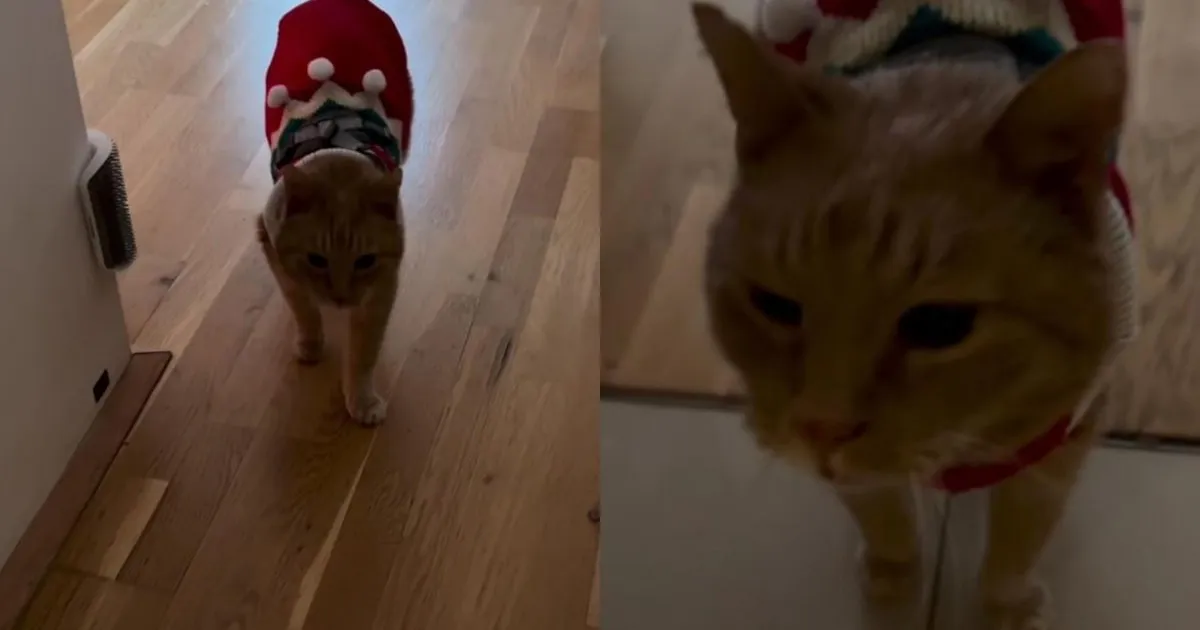
Martin, an orange rescue cat, has captured hearts across social media by demonstrating that felines can embrace winter adventures just like their canine counterparts. The rescue cat dons a custom red sweater complete with decorative pom-poms and a secure harness whenever snow calls, transforming into what observers describe as a tiny mountain guide ready for the elements.
The video, shared by the Instagram account @_thelittlepawsies_, shows Martin responding eagerly to his human's call. When summoned with his nickname "Martelin," the orange cat immediately looks up from his position and pads across the wooden floor toward the door. His tiny paws tap rhythmically as he approaches, fully dressed in his winter gear and visibly prepared for outdoor exploration.
Martin's setup reflects thoughtful pet preparation for cold weather. The red sweater provides insulation and visibility, while the harness ensures safety during outdoor excursions. This combination allows the rescue cat controlled access to snowy environments without the risks associated with free roaming during winter months.
Cats typically have lower tolerance for cold compared to dogs, and individual sensitivity varies based on breed, age, and coat thickness. Short-haired cats like orange tabbies benefit significantly from protective clothing when venturing into snow or cold temperatures. Indoor rescue cats transitioning to supervised outdoor time during winter require extra consideration. Pet owners should monitor their cats for signs of discomfort, including reluctance to move, persistent shivering, or attempts to return indoors quickly.
Martin's enthusiasm for snow time represents successful acclimation for many rescue cats. Rescue animals often show remarkable adaptability when their humans invest time in gradual exposure to new experiences. The harness-and-sweater approach provides security for both the cat and the owner, allowing exploration while maintaining control and preventing escape or injury.
The post generated significant engagement on social media, with viewers commenting on Martin's apparent readiness and adorable appearance. Many cat owners responded with interest in similar setups for their own pets, suggesting growing awareness that cats need not remain exclusively indoors during winter months.
Veterinarians generally support controlled outdoor time for indoor cats when properly supervised and equipped. The American Feline Medical Association recommends gradual acclimation to outdoor spaces, secure harnesses, and appropriate seasonal clothing. Winter adventures should remain short initially, allowing cats to build tolerance while their humans assess comfort levels and behavior.
Martin's story demonstrates that rescue cats possess the same capacity for adventure and joy that their human companions seek during snowy seasons. With proper equipment, supervision, and gradual introduction to winter conditions, cats can safely participate in seasonal outdoor activities. Martin's confident stride toward the door in his mountain-guide attire proves that rescue animals thrive when given opportunities to experience the world beyond indoor walls, one snowy paw print at a time.