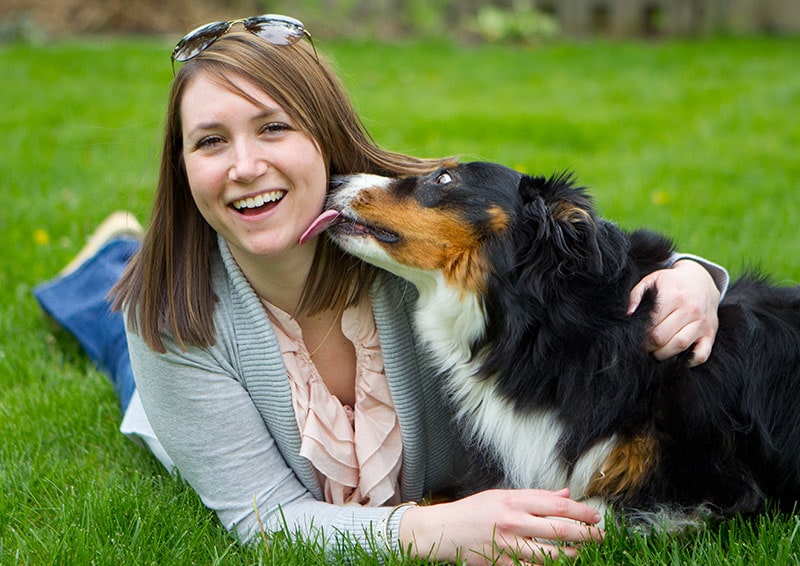
# The Sloppy Truth: Why Dogs Love Licking Faces
Face licking ranks among the most common dog behaviors, yet pet owners rarely understand what drives it. The behavior stems from multiple sources, and recognizing these motivations helps owners interpret their dog's actions accurately.
Dogs explore the world through their mouths. Puppies begin licking their mothers and littermates within days of birth. This early behavior serves practical purposes: it helps puppies identify family members, gather information about their environment, and communicate needs. The licking instinct persists into adulthood, making face licking a natural extension of how dogs process sensory information.
Affection plays a central role in facial licking. When a dog licks your face, it often signals bonding and comfort. Dogs that grew up in litters learned that maternal licking provided warmth, nourishment, and reassurance. Adult dogs may replicate this positive association by licking their owners' faces. This behavior intensifies when dogs feel excited, happy, or seeking attention from people they trust.
Scent-gathering motivates much canine face licking. Dogs possess 30 times more olfactory receptors than humans do, making scent their primary sense. A person's face contains numerous scent glands that produce distinctive odors. When a dog licks your face, it collects chemical information about your emotional state, health, and identity. This explains why dogs often lick the faces of people they know well.
Submissive behavior sometimes underlies face licking. In canine hierarchies, subordinate animals lick the faces of more dominant pack members. A dog offering face licks may be showing deference and seeking approval from an authority figure. This submissive licking typically accompanies lowered body posture and softer eye contact.
Medical concerns occasionally prompt excessive face licking. Dogs may lick faces more frequently if experiencing anxiety, stress, or discomfort. Some dogs develop compulsive licking behaviors related to underlying health conditions or behavioral disorders. If your dog suddenly increases face licking frequency or seems distressed, consult your veterinarian to rule out medical issues.
The timing and context matter tremendously. A dog greeting you at the door with face licks exhibits joy and recognition. A dog licking your face while you cry demonstrates empathy and comfort-seeking. A dog persistently licking a family member's face despite redirects might signal stress or attention-seeking.
Pet owners should recognize that not all face licking is welcome. Dogs cannot consent to personal space boundaries the way humans do, and some people find the behavior unsanitary or uncomfortable. Teaching dogs alternative greeting behaviors, such as sitting for attention, respects both human preferences and canine communication needs.
Understanding face licking creates stronger human-dog relationships. Rather than dismissing the behavior as random or annoying, owners who recognize its origins can respond appropriately. Encouraging face licking with excited reactions reinforces it, while calmly redirecting the behavior toward acceptable alternatives discourages it. Either response communicates expectations clearly to your dog.
The sloppiness of a dog's face lick reveals nothing accidental. Each lick carries information, emotion, or instinct. Recognizing what your dog communicates through facial licking deepens your understanding of canine behavior and strengthens your bond.