# Dogs' Hilarious Tactics to Stay Involved in Family Life
Dogs earn their reputation as family members partly through their relentless determination to participate in everything their humans do. From kitchen activities to backyard projects, canines deploy an endless arsenal of comedic strategies to ensure they remain part of the action.
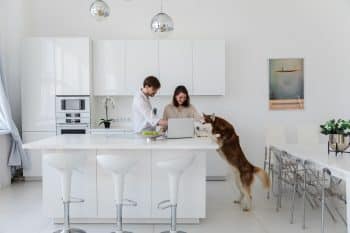
The classic kitchen shadow ranks high on the list of dog inclusion tactics. When owners prepare meals, dogs position themselves underfoot or plant themselves directly in the cooking zone, creating an obstacle course of furry devotion. This behavior stems from genuine canine logic: where humans are, food appears, and therefore, where humans go, dogs should follow. The resulting kitchen dance, where people shuffle around their stationary pet, becomes a daily family ritual.
The doorway lean represents another favorite technique. Rather than fully entering a room, dogs drape themselves across doorframes with heads propped against the wood or their entire bodies stretched sideways. This pose allows them to maintain visual contact with their people while technically "staying out" of the room. It's the canine equivalent of saying, "I'm here if you need me, and I'm definitely watching what you're doing."
Bathroom accompaniment demonstrates dogs' commitment to togetherness. Whether owners are showering, using the toilet, or simply washing hands, their dogs insist on providing bathroom company. Dogs wedge themselves into tile spaces, rest their heads on toilet seats, or create furry bath mats on the floor. Privacy appears to be a concept dogs reject entirely.
The partial participation method shows up during exercise routines, yard work, and household projects. Dogs follow owners on morning jogs but stop to smell things. They dig holes during yard work, then lie in each hole as if they've accomplished something. They "help" with laundry by sitting directly on clean folded clothes.
The sniffing-and-checking patrol happens throughout the house. Dogs follow owners from room to room, ensuring nothing happens without their inspection and approval. A trip to the bedroom requires a dog investigation. A visit to the basement becomes a full canine survey mission.
The strategic placement tactic involves positioning themselves exactly where they'll be noticed but hopefully not moved. The space between the couch and coffee table becomes prime real estate. The foot zone under dining tables during meals offers both proximity to food and direct eye contact with diners.
Vocal participation fills the gaps when physical presence alone seems insufficient. Dogs bark at vacuum cleaners, whine during phone calls, and howl during video conference meetings. They narrate their humans' activities with an ongoing soundtrack of engagement.
The toy delivery system shows dogs' active problem-solving. If humans seem bored, dogs bring toys to prove there are activities worth pursuing. If owners sit together on the couch, a dog deposits their favorite tennis ball right on someone's lap.
The "I'm not actually in your space" lean involves dogs positioning their rear ends outside a room while their heads poke in from the doorway. This compromise solution lets them monitor activity while respecting (mostly) their humans' space requests.
The strategic furniture positioning finds dogs commandeering spots that maximize human interaction. They claim the lap. They occupy the space between seated humans. They position themselves at foot level during television watching.
These behaviors reflect dogs' deeply social nature and their genuine preference for human companionship. Dogs evolved alongside humans and developed powerful motivations to remain integrated into pack activities. For dog owners, these antics transform routine daily activities into moments of connection and entertainment.