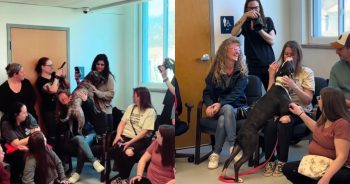
# Shelter Flips the Adoption Process and Lets Dogs Choose Their Humans
A shelter has turned traditional dog adoption on its head by allowing the dogs themselves to select their future families. Rather than having potential adopters browse kennels and choose which dog appeals to them, this innovative approach lets dogs walk through a designated area where they can interact with and "pick" the humans they want to go home with.
The concept rests on a simple truth. Dogs have personalities, preferences, and social needs just like people do. Some dogs bond instantly with energetic families. Others gravitate toward quiet, single individuals. A dog who needs an active jogging partner may feel mismatched with a retired couple who prefer leisurely walks. By letting dogs make the choice, the shelter increases the odds that placements stick long-term and reduce return rates.
Staff members facilitate the process by creating a safe, controlled environment where dogs can spend meaningful time with prospective adopters. The dogs are not rushed. They can sniff, play, nap near, or ignore potential humans without pressure. A dog might follow one person around the room while ignoring another. That choice becomes data. Staff members observe which adopters the dogs naturally gravitate toward and use those observations to guide the final matching.
This approach acknowledges something animal behaviorists have long known. Dogs form attachments based on comfort and compatibility, not on human expectations about breed or appearance. A small dog might bond more deeply with a child than with an adult. A large dog might prefer a quiet household over a chaotic one. When dogs make the selection, they express their actual needs and temperament preferences.
The shelter reports that dogs matched this way show stronger bonds with their adoptive families and experience fewer behavioral issues in their new homes. Follow-up surveys indicate that adopters feel more confident in their matches because they watched their dog actively choose them. That confidence translates into better preparation and patience during the adjustment period.
Practical benefits follow quickly. Fewer returns mean shelter resources stretch further. Staff spend less time managing post-adoption crises and more time helping other animals. Adopters invest more heavily in their placements because they feel personally selected by their dog, not the other way around.
The model also combats common shelter adoption pitfalls. Many people select dogs based on looks or breed stereotypes without considering personality fit. A beautiful Golden Retriever might end up with someone who cannot handle a dog's high exercise needs. A shy dog can seem unappealing in a kennel but transform in a quiet home. By removing humans from the selection driver's seat, the shelter eliminates these mismatches before they happen.
Word has spread about the shelter's success. Other rescues and adoption facilities have begun exploring similar programs, adapting the model to fit their space and resources. Some use designated play areas. Others allow supervised small group interactions. The common thread remains the same. Give dogs agency in their adoption outcome.
For dog owners considering adoption, this shift offers a meaningful advantage. If your local shelter or rescue uses this approach, you benefit from a pre-vetted personality match. The dog chose you because something about your energy, pace, and presence felt right to them. That is a foundation for a strong lifelong bond.