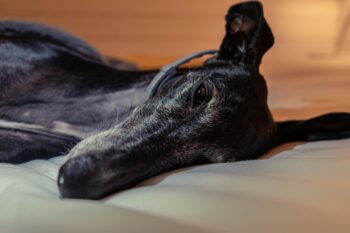
# The Right Dog Bed Makes All the Difference for Greyhounds
Greyhounds need specialized sleeping surfaces that account for their unique body structure and comfort requirements. These lean, muscular dogs have minimal body fat and prominent bones, making standard dog beds uncomfortable and potentially harmful to their health.
Greyhounds typically weigh between 50 and 88 pounds and measure up to 30 inches tall. Their long legs, narrow chest, and angular frame create pressure points when they rest on firm surfaces. A poorly chosen bed can lead to joint stress, skin irritation, and sleep disruption.
The best dog beds for greyhounds prioritize cushioning and support. Memory foam beds work well because they conform to the dog's body shape and distribute weight evenly. This reduces pressure on the spine, hips, and shoulders. Look for beds with at least 3 to 4 inches of foam density to provide adequate support without being too soft.
Orthopedic dog beds serve greyhounds especially well, particularly as they age. These beds typically combine memory foam with a sturdy base layer that prevents the dog from sinking too deeply. The orthopedic design supports joints and helps prevent arthritis development in senior greyhounds.
Raised or elevated beds offer another excellent option. These beds suspend the dog slightly off the ground, improving air circulation and reducing heat retention. Greyhounds have thin skin and low body fat, making them sensitive to temperature fluctuations. Elevated beds help them stay cool during warm months and warm during cold seasons when combined with a blanket.
Size matters significantly. Greyhounds are long dogs that need beds with enough length for them to stretch out fully. A bed measuring at least 48 inches long accommodates most greyhounds comfortably. Width should allow them to rest on their side without limbs hanging over edges.
Washable covers protect the bed from dirt and simplify cleaning. Many greyhound owners choose beds with removable, machine-washable covers. This extends the bed's lifespan and maintains hygiene. Some greyhounds have sensitive skin, so hypoallergenic or organic fabric covers may reduce irritation.
Temperature regulation becomes important for this breed. Greyhounds naturally curl into tight balls to conserve body heat. Beds with sides or bolsters help contain warmth, while open designs allow better air circulation. Some owners use both styles depending on the season.
Budget considerations range widely. Basic memory foam beds start around $75 to $150, while premium orthopedic options cost $300 to $600. Higher prices typically reflect better materials, longer durability, and superior support. Investing in quality pays off through years of use.
Greyhound rescue organizations often recommend beds from reputable brands that prioritize orthopedic support and durability. Retired racing greyhounds especially benefit from quality beds since they transition from track conditions to home living. These dogs frequently develop joint issues, making proper bedding a health investment rather than a luxury item.
Placement of the bed matters too. Greyhounds prefer quiet, draft-free locations away from high traffic areas. Placing the bed in a corner or against a wall provides security. Keep beds away from direct sunlight and heating vents.
A proper dog bed contributes to your greyhound's overall wellness. Better sleep quality supports immune function, mental health, and physical recovery. Your greyhound will spend significant time resting, making bed selection one of the most important purchases for their comfort and longevity.