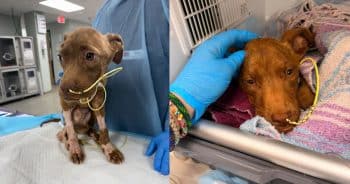
# Puppy Found Barely Alive on Houston Streets Takes First Steps Toward Recovery
A puppy discovered in critical condition on Houston streets is now making remarkable progress after receiving emergency veterinary care. The young dog, named Rudy, arrived at an area animal rescue in severe distress, barely able to move or respond to handlers.
Rudy's condition when rescued reflected severe neglect and possible abuse. The puppy showed signs of malnutrition, dehydration, and multiple untreated injuries. Local rescue workers found him abandoned in a location where survival seemed unlikely without immediate intervention. Transport to a veterinary facility happened within hours of discovery, a factor that likely saved his life.
Emergency stabilization proved critical in Rudy's first days of care. Veterinarians administered intravenous fluids to address severe dehydration, a common life-threatening condition in abandoned animals. Nutritional support came through carefully controlled feeding protocols, as malnourished dogs cannot tolerate large meals or regular food immediately. The vet team also treated visible wounds and conducted diagnostic imaging to check for internal injuries.
Within weeks, Rudy's transformation became visible. The puppy gained weight steadily under proper nutrition. His energy levels increased, and he began interacting with rescue staff. Physical therapy exercises helped rebuild muscle strength in his legs. Each small milestone, from standing unassisted to taking tentative steps, represented progress toward independent mobility.
The rescue organization running Rudy's case works regularly with severely compromised animals pulled from Houston streets. Staff members report that many puppies arrive in similar condition, often suffering from parasites, infections, and trauma-related behavioral issues alongside physical injuries. Rudy's case highlights both the heartbreak of animal abandonment and the effectiveness of coordinated rescue efforts.
Behavioral assessment began once Rudy stabilized physically. Rescue workers evaluated his temperament, socialization needs, and any signs of fear or aggression. Early intervention during this recovery window improves outcomes significantly. Puppies like Rudy show remarkable resilience when given proper care, safety, and human interaction during the healing process.
The rescue facility now focuses on preparing Rudy for eventual adoption. This phase includes continued physical rehabilitation, behavioral training, and medical clearance from veterinarians. Potential adoptive families will receive detailed information about Rudy's history, current needs, and any ongoing medical requirements.
Rudy's story underscores the reality of animal welfare in urban areas. Abandoned and neglected dogs face extreme odds without rescue intervention. The resources required for his recovery, including emergency veterinary care, specialized nutrition, and round-the-clock monitoring, demonstrate why animal rescue operations depend on community support and donations.
For Houston residents, Rudy's case serves as a reminder that reporting abandoned animals quickly saves lives. Even animals in the worst condition can recover with prompt veterinary attention and proper care. Those who witness animal neglect or abandonment should contact local animal control or rescue organizations immediately rather than assuming the animal will be found by someone else.
Rudy will likely become available for adoption once his medical team confirms full recovery. His journey from barely alive on Houston streets to a healthy, mobile puppy ready for a forever home represents the transformative power of rescue and veterinary medicine.