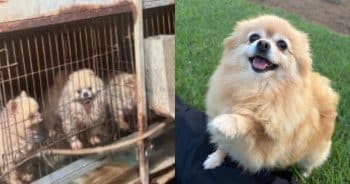
# Breeder Pomeranian Finally Gets Her First Family After Years in Breeding Cycle
A tiny Pomeranian named Seri spent her entire life in a breeding operation, producing litter after litter with no family of her own to love her. Now retired, she is experiencing the joy of a home for the first time.
Seri's story reflects a harsh reality for countless breeding dogs across the country. Small breeds like Pomeranians are popular targets for commercial and backyard breeding operations because they command high prices and reproduce frequently. During her breeding years, Seri never knew the comfort of a couch, the warmth of a child's lap, or the simple pleasure of playing fetch in a yard. Every aspect of her life centered on producing puppies for profit.
Breeding dogs typically endure confined living conditions. They stay in cages or kennels, receive minimal human interaction, and experience repeated pregnancies and nursing cycles that tax their bodies. Female dogs like Seri are bred continuously until their productivity declines, usually around age five or six. At that point, many are discarded or surrendered to rescue organizations.
Seri's rescue came through dedicated animal advocates who recognized her value as an individual, not a production unit. The transition from a kennel to a home presents challenges for breeding dogs. They often display anxiety, fear of new environments, and unfamiliarity with basic household routines. Some struggle to climb stairs, walk on different flooring types, or understand that toys exist for play. Seri required patience as she learned to be a pet.
The veterinary community acknowledges the physical toll breeding takes. Repeated pregnancies increase risks for uterine infections, bone density loss, and premature aging. Pomeranians, a toy breed weighing only three to seven pounds, face additional strain during pregnancy and delivery. Many breeding Pomeranians develop joint problems, dental disease, and metabolic issues from years without preventive care.
Pomeranians as a breed already face health challenges. Their small size predisposes them to patellar luxation, heart murmurs, and tracheal collapse. Breeding dogs from puppy mills or irresponsible breeders often lack health screening, genetic testing, and veterinary oversight. These animals arrive at rescue organizations requiring extensive medical attention.
Seri's adoption opens doors to a second chapter. Her new family likely consulted with veterinarians experienced in caring for former breeding dogs. These specialists understand the behavioral rehabilitation these animals require. Many former breeding dogs respond well to patient, gradual socialization and consistent routines.
The story also highlights the demand problem driving breeding operations. Pomeranians rank among the most popular toy breeds in America. When buyers purchase from breeders without verifying health testing, breeding ethics, or living conditions, they perpetuate cycles that trap dogs like Seri in kennels for years.
Prospective Pomeranian owners should work with reputable breeders who perform genetic screening, maintain small breeding programs, and retire dogs to homes rather than discarding them. Rescue organizations like those that saved Seri offer another path. Adult dogs already spayed or neutered, often with known temperaments, provide companionship without supporting exploitative breeding practices.
Seri's journey from commercial breeding to family life demonstrates that even dogs who missed their formative years can thrive with proper care and commitment. Her story serves as a reminder that every dog deserves to be someone's pet, not someone's profit.