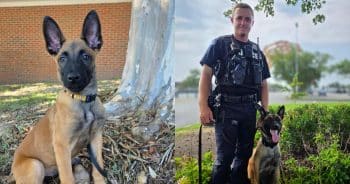
# Police Rescue a Neglected Puppy, One Year Later, He Joins the Force
A puppy pulled from neglect has transformed into a working police dog. The dog's journey from rescue to service demonstrates both the resilience of canines and the power of second chances in law enforcement.
Police officers discovered the puppy in poor condition during an intervention. The animal received immediate veterinary care and rehabilitation following the rescue. Rather than returning to a typical home, the dog's handlers recognized potential for police work and enrolled him in specialized training.
Dogs selected for law enforcement roles undergo rigorous evaluation before formal training begins. Trainers assess temperament, drive, and physical capability. A dog must show confidence, focus, and willingness to work under pressure. Many rescue dogs possess these qualities even after experiencing neglect, provided they receive proper socialization and medical care during recovery.
The transformation took approximately one year. During this period, the puppy grew physically while his handlers developed his skills in detection, tracking, or patrol work. The specific training depends on the department's needs. Some police dogs specialize in narcotics detection, explosives, or suspect apprehension. Others focus on search and rescue operations or handler protection.
This story reflects a growing trend in police departments nationwide. Rescue dogs and shelter animals increasingly fill K9 unit positions. The practice offers benefits beyond animal welfare. Rescue dogs often display heightened motivation and bonding with handlers, having experienced instability before finding purpose in police work.
The rehabilitation phase proved critical to the dog's success. Veterinarians addressed any underlying health issues from neglect. Behaviorists worked on socialization to ensure the dog could function reliably in high-stress environments with loud noises, crowds, and complex scents. Handlers built trust gradually, establishing the communication system necessary for effective teamwork.
Police K9 units operate under strict protocols. Working dogs receive regular veterinary checkups, balanced nutrition formulated for active dogs, and appropriate rest periods. A police dog's career typically spans six to ten years, after which the dog either enters retirement or transitions to a handler's home. Many departments honor retiring K9s with adoption by their handlers or careful placement in suitable homes.
The rescued puppy's success story carries weight beyond one animal. It demonstrates that a rough start does not determine a dog's future. With proper care, training, and structure, even severely neglected animals can develop into valuable, confident workers. The dog now serves the community that helped save him.
His presence in the K9 unit also raises awareness about animal neglect and rescue possibilities. Police departments participating in rescue dog programs often receive positive community attention, which can drive adoption of other shelter animals.
This puppy's journey from victim to protector illustrates the connection between rehabilitation and purpose. The dog needed intervention, healing, and someone willing to invest time in his training. Police handlers provided exactly that. The result benefits the dog, the handlers who work with him daily, and the public he serves.