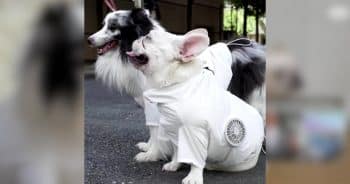
# Tokyo's Coolest Dogs Wear Fan-Powered Jackets to Beat Brutal Summer Heat
Tokyo's summer temperatures now regularly exceed 95 degrees Fahrenheit, creating dangerous conditions for dogs who cannot sweat and rely on panting to cool down. Pet owners in Japan's capital have embraced an innovative solution: battery-powered cooling jackets equipped with small fans that circulate air directly against a dog's body.
These specialized garments represent a practical response to Japan's intensifying heat waves. Dogs are extremely vulnerable to heat stress because they lack functional sweat glands across their skin. When ambient temperatures climb too high, panting alone cannot dissipate enough body heat, leading to heat exhaustion and potentially fatal heatstroke. Urban dogs in Tokyo face additional risk factors from pavement that radiates heat and limited access to shaded areas during daytime walks.
The fan-powered jackets work by drawing cool air across the dog's coat and skin, creating a direct cooling effect that reduces core body temperature. Battery packs typically run for several hours per charge. The design allows for comfortable movement while the jacket stays securely fitted. Pet owners report that their dogs show visible relief when wearing the devices, maintaining more energy and enthusiasm during outdoor activities that would otherwise prove exhausting.
Veterinarians in Tokyo acknowledge these products address a genuine welfare concern. Dogs with thick coats, senior dogs, and brachycephalic breeds like Pugs, French Bulldogs, and Shih Tzus face elevated heat risk. Overweight dogs also struggle more in heat. The jackets provide an extra safety layer alongside traditional cooling methods like limiting midday exercise, providing plenty of fresh water, and creating air-conditioned rest spaces at home.
Beyond the jackets themselves, Japanese pet owners employ multiple heat management strategies. Cooling beds filled with gel inserts have become standard in many households. Dog parks now open exclusively during early morning and evening hours. Some owners have shifted their walking schedules to begin before 6 a.m. and resume after 7 p.m., avoiding the hottest parts of the day entirely.
Climate change has made these adaptations necessary rather than optional. Tokyo recorded its hottest summers on record in recent years, with the trend accelerating. Japan Meteorological Corporation data shows temperature increases outpacing global averages in urban areas. Pet owners recognize that their dogs cannot adapt to these extremes through behavior alone.
The fan-powered jackets cost between 3,000 and 8,000 yen, roughly 20 to 55 dollars USD. While not every dog owner can afford them, they represent a valuable tool for those with high-risk pets. Pet insurance companies in Japan now sometimes offer discounts for owners who use verified cooling devices, acknowledging their role in preventing heat-related veterinary emergencies.
Retailers across Tokyo report steady sales of these jackets throughout the summer months. Online pet supply companies ship them nationwide as heat waves have become a concern beyond the capital. The products appeal to owners willing to invest in their dog's comfort and safety during periods when outdoor time becomes genuinely risky without active temperature management.
For dogs living in Tokyo, these innovative jackets have become part of responsible summer care. They allow pets to enjoy outdoor time, receive necessary exercise, and maintain their quality of life despite environmental conditions that would otherwise force them to stay indoors during daylight hours.