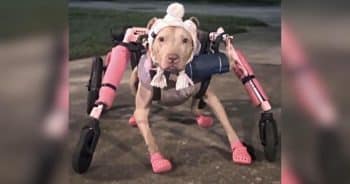
# Someone Stole a Disabled Dog's Wheelchair and Police Want Answers
A disabled dog lost mobility and independence when thieves stole the custom wheelchair that allowed the animal to walk. Police now seek information about the theft, which has left the dog's owner searching for answers and potentially thousands of dollars to replace the specialized equipment.
The incident highlights a troubling trend. Thieves target pet medical devices because they carry real value and owners often leave them in accessible places like porches, yards, or vehicles. A quality dog wheelchair costs between $1,500 and $3,000 depending on the dog's size and the device's complexity. For disabled dogs, these devices represent the difference between mobility and confinement.
Disabled dogs need wheelchairs for several reasons. Rear limb paralysis from spinal cord injuries, arthritis, degenerative myelopathy (a progressive nerve disease), or amputation all rob dogs of their ability to walk independently. A properly fitted wheelchair harnesses the dog's front legs to power movement while supporting the back legs. This enables the dog to exercise, explore, and maintain muscle tone. Without it, a disabled dog faces rapid muscle atrophy, depression, and a severely limited quality of life.
Constructing a functional dog wheelchair requires precision. Veterinarians and specialized manufacturers measure the dog from elbow to hip, assess weight distribution, and account for the animal's gait. Custom wheels, harnesses, and frame angles all factor into the design. Off-the-shelf options exist but often require adjustments. Replacing a stolen wheelchair means scheduling veterinary consultations, waiting for manufacturing timelines, and absorbing replacement costs that many pet owners cannot afford.
The owner's distress goes beyond financial loss. A disabled dog who suddenly loses mobility faces psychological trauma. The animal knows it once moved freely and now cannot. Anxiety, aggression, and behavioral problems often follow prolonged immobility.
Police departments urge pet owners with disabled animals to take precautions. Store wheelchairs indoors when not in use. Keep photographs and serial numbers documented. Consider GPS tracking devices attached to the wheelchair frame. Register the device with local pet organizations if such programs exist. Report thefts immediately to both police and local animal welfare groups.
If you own a disabled dog, document your wheelchair now. Take photos of the frame, wheels, and any identifying marks. Note the manufacturer, model, and any customizations. Store this information in multiple locations. If theft occurs, share images widely through local social media groups, animal rescues, and neighborhood apps. Thieves often attempt to sell stolen medical equipment quickly, so rapid distribution of information increases recovery odds.
Anyone with information about the stolen wheelchair should contact their local police department's non-emergency line. Tips can also be submitted anonymously through crime stoppers programs in many jurisdictions.
The theft represents a callous act against an animal already facing significant health challenges. Police and community members continue working to recover the wheelchair and hold the thieves accountable.