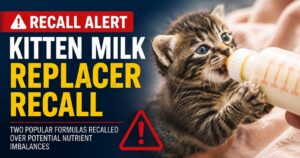
# Kitten Milk Replacer Formulas Pulled Over Potential Nutrient Concerns
Several kitten milk replacer products have been recalled due to concerns about inadequate nutrient levels that could affect the health and development of orphaned and bottle-fed kittens.
The recall centers on formulations that may not meet the nutritional standards required for proper kitten growth. Kittens rely entirely on milk replacer during their first weeks of life when they cannot nurse from their mother. Deficiencies in critical nutrients during this window can lead to weak bone development, poor immune function, and delayed growth that compounds into adulthood.
Kitten milk replacer serves as a complete substitute for maternal milk and must contain precise ratios of protein, fat, carbohydrates, vitamins, and minerals. The products under review reportedly fell short of these requirements, raising veterinary concerns about long-term developmental consequences for affected animals.
Veterinarians recommend that anyone currently using kitten milk replacer products check the specific product names and batch numbers against recall notices. Bottle-fed kittens should switch to an alternative formula immediately if their current product appears on the recall list. This switch should happen gradually over three to five days to avoid digestive upset, mixing the old formula with increasing amounts of the new one.
The Association of American Feed Control Officials (AAFCO) establishes nutritional standards for pet food and milk replacers. Products must meet these requirements before reaching shelves. This recall underscores the importance of manufacturers adhering to these standards during production and quality control.
Pet owners and shelter workers should consult their veterinarian about which replacement formulas are safe alternatives. Approved options include commercial formulas like KMR (Kitten Milk Replacer) by PetAg and Nurturall-C by PetAg, which have established track records meeting AAFCO standards. Veterinarians can also provide guidance on proper bottle-feeding technique, including correct temperature and feeding frequency based on kitten age.
Orphaned kittens taken in by rescues, shelters, or private individuals depend entirely on caregivers to make sound nutrition choices. Poor nutrition during the critical first eight weeks affects bone density, organ development, and immune system maturation. Kittens fed inadequate formulas may appear healthy initially but develop problems later, including skeletal deformities and increased susceptibility to infections.
Anyone fostering or caring for bottle-fed kittens should bookmark the FDA's pet food recall database and check for updates regularly. Reporting any health issues in kittens fed recalled products helps veterinarians and regulatory agencies track potential problems.
The kitten rescue community has been alerted to the recall. Shelters and foster networks are reviewing their inventory and switching to verified alternatives. This serves as a reminder that not all milk replacers are created equal, and purchasing from reputable manufacturers remains essential.