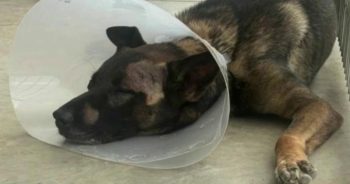
# Police K-9 Stabbed Multiple Times During Burglary Arrest
A police K-9 sustained serious injuries while assisting officers during a burglary suspect arrest. The dog, deployed to help apprehend the suspect, was stabbed several times in the face during the confrontation.
The incident highlights the physical dangers that working K-9s face regularly on the job. Police dogs serve critical functions in law enforcement, from suspect apprehension to tracking and detection work. Their deployment in potentially violent situations puts them at direct risk of injury from armed or desperate suspects.
The stabbing occurred as the K-9 engaged with the burglary suspect during what appears to have been an active arrest operation. While specific details about the suspect's weapon and the exact circumstances remain limited, the wounds to the dog's face indicate a serious and deliberate attack. Facial injuries in animals carry additional complications beyond the wounds themselves, affecting the dog's ability to breathe, eat, and see properly.
Police K-9s receive specialized training to perform their duties under extreme stress and dangerous conditions. Despite this preparation, they remain vulnerable to weaponized attacks. Unlike human officers who can wear protective gear and call for backup verbally, K-9s depend entirely on their handlers and fellow officers for protection during and after incidents.
The incident raises questions about K-9 safety protocols during high-risk arrests. Many police departments have implemented guidelines for when K-9s should be deployed, particularly in situations where suspects are known to be armed or have demonstrated violence. Some agencies now use ballistic vests designed for dogs, though widespread adoption of this protective equipment remains inconsistent across departments.
Recovery and veterinary care for injured working dogs involves specialized attention. Facial wounds require careful management to prevent infection and restore function. The dog's return to duty depends on the severity of injuries and the animal's physical and psychological recovery. Some K-9s return to active work following injury treatment, while others transition to retirement or modified roles.
The attack also carries legal implications. Charges against suspects often include animal cruelty statutes in addition to the original crime. Many jurisdictions have enhanced penalties specifically for harming police animals, recognizing both the economic value of the training investment and the moral dimension of injuring an animal in service to the community.
This incident reflects the broader conversation about K-9 deployment in policing. While these dogs provide invaluable service in apprehension and detection work, their safety remains a concern for handlers and animal welfare advocates alike. Police departments continue refining deployment strategies and protective equipment to minimize risks while maintaining the operational effectiveness that K-9 units provide.
The dog's handlers and the broader police community typically rally around injured K-9s, with many departments providing transparent updates on the animal's condition and recovery progress. Public support for injured police dogs often runs high, with community members offering donations for veterinary care and rehabilitation.