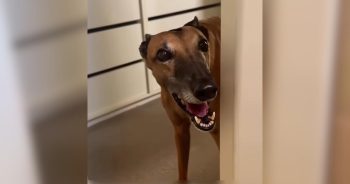
# After 53 Races, Adopted Greyhound Discovers Life Beyond the Track
A retired racing greyhound now enjoys the comfort and love of a permanent home after spending years competing on the track. The dog completed 53 races before finding adoption, marking the beginning of a completely different life focused on rest, companionship, and the simple pleasures most dogs take for granted.
Racing greyhounds spend their athletic prime chasing mechanical lures around tracks at speeds exceeding 40 miles per hour. These lean, muscular dogs are bred specifically for their speed and prey drive. After their racing careers end, typically between ages three and five, they require significant adjustment to domestic life. Many have never lived in a home, walked on carpet, climbed stairs, or interacted with family life in any meaningful way.
This particular greyhound's journey from track to home illustrates the broader reality facing thousands of retired racing dogs annually. The racing industry has declined considerably over the past two decades as public awareness of animal welfare concerns has grown. States have closed tracks, and adoption programs have expanded to find homes for dogs no longer deemed profitable for competition.
Greyhound adoption organizations across the country work to place retired racers into forever homes. Groups like the National Greyhound Adoption Program and regional rescue efforts focus on assessing each dog's temperament, managing health issues common to racing dogs, and matching them with suitable families. These organizations often handle medical care, behavioral assessment, and transition support.
Retired racing greyhounds typically require specific considerations. Their thin skin and minimal body fat make them sensitive to cold temperatures, necessitating sweaters and blankets in cooler climates. Their prey drive means they may chase smaller pets unless carefully supervised. Many have little experience with stairs, slippery floors, or typical household environments. Patient owners who understand these needs often find greyhounds to be gentle, affectionate companions.
This greyhound's story resonates because it represents freedom from constant competition and physical demands. Instead of running races multiple times weekly, the dog now enjoys leisurely walks, naps on comfortable furniture, and the undivided attention of loving owners. Many retired racers display surprising couch-potato tendencies despite their athletic heritage, content to lounge for 20 hours daily.
The adoption community celebrates each placement as a victory. For every greyhound that finds a home, another dog receives resources and attention it might otherwise lack. The availability of adoption programs gives racing dogs a second chance many other animals never receive.
Prospective owners considering a retired racing greyhound should work with established adoption organizations. These groups provide breed-specific knowledge, health screenings, and ongoing support. They match dogs with families prepared for the unique transition needs these athletes require. With proper introduction and patience, retired greyhounds become devoted family members who finally experience life beyond the finish line.