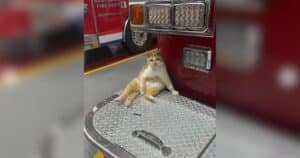
# Stray Cat Finds Shelter and Purpose at Local Fire Station
A lonely stray cat wandered into a fire station and discovered more than just a warm place to sleep. The feline now works alongside firefighters as an unofficial crew member, bringing companionship to the station and comfort during long shifts.
The cat arrived at the station as an outsider seeking refuge. Firefighters noticed the animal was thin and cautious, showing signs of life on the streets. Rather than turn the cat away, the crew decided to provide food, shelter, and care. The cat responded by settling into station life, quickly adapting to the busy environment of alarms, trucks, and personnel.
Fire stations operate around the clock with crews working extended shifts. The work involves high stress and long periods away from family. The presence of an animal companion helps reduce that isolation. Studies on first responder wellness show that interaction with pets lowers cortisol levels, decreases blood pressure, and improves mental health outcomes. This stray cat began serving that exact purpose.
The firefighters established a routine with the cat. The animal receives regular meals, veterinary care, and attention from the entire crew. Firefighters report that the cat greets them at shift changes, sleeps near them during downtime, and provides a calming presence during between-call moments. The cat has become part of the station's identity and morale.
Adopting strays into workplaces presents practical considerations. Fire stations must ensure the cat receives proper nutrition, medical care, and safety precautions around equipment. The station arranged veterinary checkups to assess the cat's health after street life. Vaccinations, parasite treatment, and any necessary dental work were completed. Station rules were established to keep the cat away from hazardous areas while allowing access to common spaces.
The firefighters named the cat and integrated it into daily operations. The cat now has a designated sleeping area, food and water stations positioned safely, and regular playtime schedules. Shift-to-shift handoff reports now include updates on the cat's behavior and wellbeing, treating it as a genuine member of the crew.
This story reflects a growing recognition of how animals enhance workplace environments, particularly in high-stress professions. Police departments, hospitals, and military units have formally integrated animals into operations for their psychological benefits. Fire stations increasingly welcome working animals or resident pets as morale boosters.
The stray's transformation matters beyond the station walls. It demonstrates that rescue does not always require formal shelters or adoption events. Sometimes rescue happens organically when compassionate people encounter an animal in need. The firefighters took responsibility without formal documentation or fanfare, simply recognizing that they could help.
For pet owners, this story underscores the importance of community care for street animals. Fire stations, police departments, and other municipal facilities can become safe havens for strays. Those concerned about homeless cats can contact local stations to learn whether they accept animals or partner with rescue organizations.
The stray cat transformed from a desperate survivor into a valued crew member. The firefighters gained a companion that eases their burden. Both benefited from a simple decision to extend kindness.