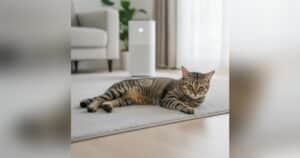
# Air Purifiers for Cats: Protecting Feline Health
Cat owners face a persistent challenge. Indoor cats breathe air filled with allergens, dander, and odors that affect both feline and human health. Air purifiers offer one solution, but not all units suit homes with cats.
The best air purifiers for cats prioritize HEPA filtration. These filters trap cat dander, a primary allergen affecting cats and their owners. Cats with asthma or respiratory sensitivities benefit most from continuous air cleaning. Pet dander circulates through homes constantly, settling on furniture and bedding. HEPA filters capture particles as small as 0.3 microns, removing up to 99.97 percent of these irritants.
Noise levels matter with cats. Felines startle easily at loud appliances. Quieter models under 50 decibels let purifiers run without stressing your cat. Placement also counts. Position units away from litter boxes, which produce ammonia that triggers respiratory issues.
Several features distinguish cat-friendly purifiers. Units with automatic sensors adjust fan speed based on air quality, reducing unnecessary noise. Activated carbon filters address litter box odor alongside particle filtration. Some models include UV-C light technology to neutralize bacteria and viruses.
Size determines effectiveness. Larger rooms need purifiers with higher clean air delivery rates (CADR). A purifier rated for 300 square feet struggles in a 500-square-foot living room. Check manufacturer specs before purchasing.
Filter replacement schedules affect long-term costs. Quality purifiers require filter changes every six to twelve months. Budget-friendly units may need monthly replacements, driving expenses up quickly.
Cat-specific purifiers address real health concerns. Cats with asthma, allergies, or chronic respiratory illness show improvement with consistent air filt