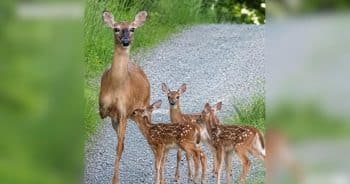
A three-legged white-tailed deer captured the hearts of wildlife observers after emerging from the woods with two healthy fawns in tow. The doe, missing one front leg, demonstrated the resilience and maternal strength that wild animals display even when facing significant physical challenges.
The sighting highlights the remarkable adaptability of deer in the wild. White-tailed does regularly raise fawns despite injuries or disabilities. This particular mother navigated the demands of pregnancy, birth, and early nursing while managing mobility on three legs. Wildlife experts note that deer possess impressive compensatory abilities. They redistribute weight and adjust their gait to accommodate limb loss.
The presence of two fawns suggests the doe successfully maintained adequate nutrition during gestation and lactation. This achievement speaks to her access to sufficient food sources and shelter. Fawns remain dependent on their mother's milk for the first several months of life, making maternal health critical to their survival.
Wildlife observers who spotted this family group exercised appropriate caution. Observing from a distance protects both the doe and her fawns. Mother deer defend their young aggressively against perceived threats, and human presence can stress nursing mothers during critical developmental periods.
The three-legged doe's journey offers a window into wild animal survival. Injuries from vehicle collisions, predators, or environmental hazards occur regularly in deer populations. Most injured deer do not survive, making this doe's success noteworthy. Her ability to bear and care for two offspring demonstrates that physical disability does not automatically prevent reproductive success in wildlife.
This story reinforces the importance of respecting wild animals in their natural habitats. When people encounter injured or disabled wildlife, the best action involves maintaining distance and contacting local wildlife authorities if intervention becomes necessary. The three-legged doe's story ultimately belongs to her, her fawns, and the forest ecosystem they inhabit.