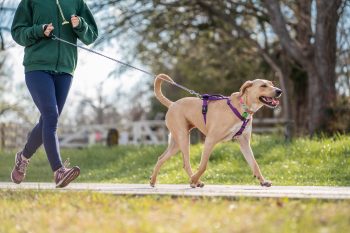
# Running With Your Dog: Finding the Right Leash Makes All the Difference
Running alongside your dog offers both of you exercise, bonding time, and mental stimulation. The leash you choose directly affects safety, comfort, and enjoyment for both runner and dog. A poor-fitting or wrong-type leash can cause injury, tangling, or lost control. The right leash transforms your run into a smooth, secure experience.
Different leash styles serve different running needs. Standard fixed-length leashes, typically four to six feet long, work for dogs with solid training and predictable behavior. Hands-free leashes that attach around your waist free both arms for natural running motion and leave your hands available for balance or carrying water. Retractable leashes give dogs more freedom to explore but require careful management at higher speeds to prevent sudden jerking or entanglement.
Material matters for durability and comfort. Nylon leashes resist moisture from sweat and weather but can chafe your hands during long runs. Leather leashes feel better against skin but require regular maintenance. Paracord leashes offer strength and weather resistance while remaining lightweight. Some runners prefer reflective or high-visibility materials for safety during early morning or evening runs.
Your dog's size, age, and temperament guide your choice. Large, strong dogs like Labrador Retrievers or German Shepherds need sturdy leashes with secure attachment points and enough durability to handle pulling. Smaller breeds like Beagles or Cocker Spaniels may do well with lighter-weight options. Senior dogs benefit from designs that reduce strain on joints. Young, energetic dogs require leashes with reliable control features.
Handle design significantly impacts your comfort over several miles. Padded handles prevent rope burn and reduce fatigue. Some runners prefer ergonomic designs that distribute weight evenly across the palm. Width matters too. A thin handle concentrates pressure on a small area, while wider handles spread force over larger skin surface. Test the grip while wearing running gloves if you typically run in cool weather.
The attachment point on your dog's collar or harness affects safety and comfort. Leashes that connect to a harness rather than a collar reduce strain on your dog's neck and provide better control. Front-clip harnesses discourage pulling by redirecting your dog's forward momentum when they surge ahead. Back-clip designs work better for dogs that run steadily without excessive pulling.
Length considerations balance freedom with control. Shorter leashes keep dogs closer during high-speed running or on busy trails. Longer leashes give room for mild exploration on slower recovery runs. Many runners prefer adjustable lengths that adapt to different terrain and conditions.
Reflective materials, bright colors, and LED attachments enhance visibility for early morning or evening runs. Safety becomes the priority when running near traffic or in low-light conditions.
Weather resistance protects your investment. Quality leashes resist mold, mildew, and UV damage. Quick-dry materials work well for runners in humid climates or those who run near water.
Before investing in any leash, ensure your dog has proper conditioning for running. Start with short distances and slower paces, gradually building endurance. Puppies under 12 months should not run long distances due to developing joints. Flat-faced breeds like Bulldogs or Pugs face breathing challenges during vigorous exercise.
A well-chosen running leash becomes an extension of your connection with your dog, enabling miles of shared activity and improved fitness for both of you.