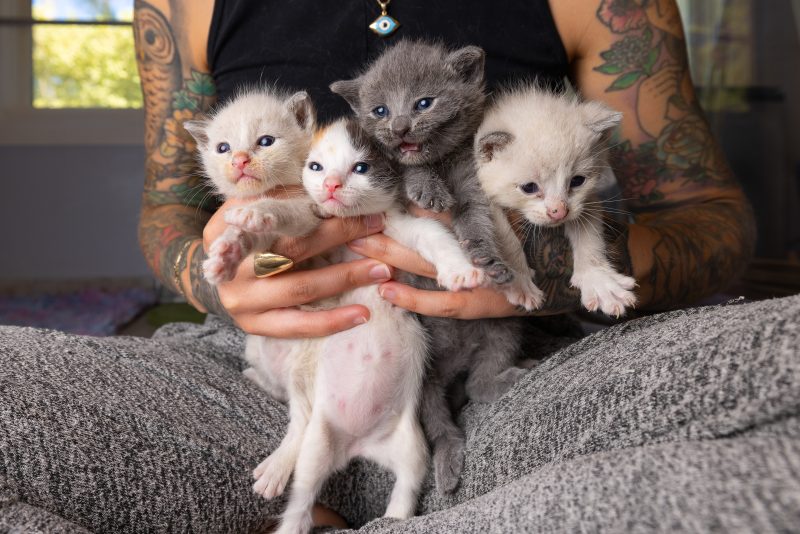
# Orphan Kitten Club Transforms Rescue Care Through Hannah Shaw's Innovative Network
Hannah Shaw founded Orphan Kitten Club to address a critical gap in kitten rescue. Newborn and orphaned kittens require specialized round-the-clock care that many shelters cannot provide. Shaw created a system that connects trained foster caregivers with vulnerable kittens who need bottle feeding, temperature regulation, and constant monitoring during their first weeks of life.
The organization operates as a network rather than a traditional shelter. Orphan Kitten Club recruits, trains, and supports foster parents who care for neonatal and orphaned kittens in home environments. This model allows kittens to receive individualized attention while freeing up shelter resources for adult cats. Foster families provide meals every two to four hours for very young kittens, maintain proper warmth, and monitor health development closely.
Shaw's approach addresses mortality rates that plague neonatal kitten care. Without proper nutrition and environment, orphaned kittens face steep odds of survival. Bottle-fed kittens require precise feeding techniques, appropriate formula temperatures, and burping after meals, much like human infants. Foster caregivers trained by Orphan Kitten Club learn these critical skills before taking kittens into their homes.
The organization has expanded beyond simple foster coordination. Orphan Kitten Club now provides educational resources, connects its network with veterinarians experienced in neonatal care, and creates community around kitten rescue. Foster families share experiences, troubleshoot challenges, and celebrate milestones as their charges grow. This peer support system strengthens outcomes and retention among caregivers who might otherwise feel isolated managing demanding infant kittens.
Shelters benefit substantially from this model. When rescue organizations lack capacity for round-the-clock kitten care, they partner with Orphan Kitten Club's network. Kittens receive life-saving care without overwhelming shelter staff. Once kittens reach weaning age and independence, many return to partner shelters for adoption, freeing foster homes for the next cohort of vulnerable newborns.
The network's impact extends to reducing euthanasia rates in shelters nationwide. Neonatal kittens often face grim prospects in overcrowded facilities. By creating dedicated pathways for their care, Orphan Kitten Club gives these animals realistic survival chances. The organization has helped thousands of kittens survive their vulnerable first weeks.
Shaw's work also raises awareness about the realities of kitten rescue. Many adopters never consider newborns and orphans because they assumed such kittens would not survive. Orphan Kitten Club's visibility and success stories change that perception. Foster families become ambassadors for neonatal kitten care, demonstrating that with proper training and resources, these fragile animals thrive.
The financial model relies on donations and partnerships with shelters. Some foster caregivers receive supply support including formula, bottles, and heating equipment. This cost-sharing approach makes the network sustainable while keeping overhead low compared to traditional brick-and-mortar facilities.
Orphan Kitten Club represents a scalable solution to a widespread animal welfare problem. The network model allows rapid expansion without massive capital investment. Other rescue organizations now study Shaw's approach to replicate it in their regions. This replicability means vulnerable neonatal kittens can access specialized care nationwide rather than only where large resources exist.