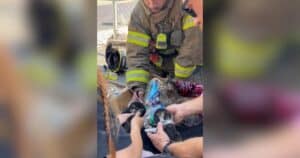
# Firefighters Rush Into Burning Home to Save Kittens Trapped Inside
Firefighters entered a burning home and rescued kittens trapped inside the structure, prioritizing the young cats alongside their search for human occupants. The rescue underscores how first responders treat animal emergencies as integral to their mission, not as secondary concerns.
Details about the specific incident remain limited, but the event highlights a growing reality in modern fire services. Firefighters across the country now receive training in animal rescue techniques. Many departments carry oxygen masks sized for pets and know how to safely extract animals from smoke-filled spaces without causing additional harm.
Kittens face particular vulnerability in house fires. Young cats lack the experience to find exits and often hide in enclosed spaces when frightened. Smoke inhalation affects them faster than adult cats due to their smaller lung capacity. Thick, black smoke can disorient them completely, making self-rescue nearly impossible.
The incident raises important questions for cat owners about fire preparedness. Veterinarians recommend keeping cats in carriers or specific rooms during evacuations, not leaving them to fend for themselves. Microchipping cats before an emergency happens increases the odds of reunification if they escape or become separated during the chaos of evacuation. Many animal shelters and veterinary clinics offer low-cost microchipping services.
Fire departments increasingly recognize that animal rescue calls require specialized response. Some departments employ dedicated animal rescue teams. Others partner with local animal control agencies and humane societies to handle pet emergencies. The National Fire Protection Association acknowledges that first responders should help reunite families with pets when safe to do so.
Cats are especially prone to hiding when stressed, which complicates rescue efforts. Firefighters search under beds, in closets, and inside walls where frightened kittens might take shelter. Thermal imaging cameras help locate animals in smoke-filled rooms, though they work better for larger animals than for small kittens.
Recovery care matters just as much as the rescue itself. Kittens pulled from fires need immediate veterinary evaluation, even if they appear unharmed. Smoke inhalation can cause delayed lung damage that develops over hours or days. Veterinarians check for singed fur, burned paw pads, and respiratory distress. Oxygen therapy, anti-inflammatory medications, and monitoring help affected kittens recover fully.
Pet owners should plan ahead for emergencies. Keep a current photo of your kittens accessible. Update identification tags with your phone number. Store carriers in an easy-to-grab location rather than buried in a closet. If evacuation becomes necessary, grab your cats and carriers first. Never assume they will escape on their own.
Local fire departments often offer home safety inspections and can advise on pet emergency preparedness. Some fire stations keep pet oxygen masks on hand specifically for situations like this one. Calling ahead to ask if your local department offers this service gives you peace of mind and helps them understand community needs.
The heroic actions of these firefighters demonstrate that caring for pets extends across professions. Their willingness to enter burning structures for kittens shows that all animal lives matter in emergency response.