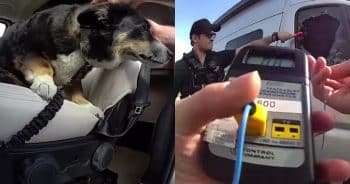
A dog trapped inside a sweltering van for nearly four hours faced a life-threatening situation until a quick-thinking deputy took action. The incident underscores the dangers pets face when left alone in vehicles, even for what owners believe are brief periods.
The dog remained confined in the hot van while temperatures inside climbed to dangerous levels. Overheating in vehicles kills pets rapidly. Dogs cannot regulate body temperature like humans do. They lack functional sweat glands and rely on panting, which becomes ineffective in sealed, hot environments. Within minutes, a dog's body temperature can spike to lethal levels, causing heatstroke, organ failure, and death.
A deputy arrived at the scene and recognized the emergency. Rather than wait for the owner to return or follow lengthy bureaucratic procedures, the officer broke into the vehicle to extract the animal. This decision likely saved the dog's life. Every minute trapped in extreme heat increases risk of permanent neurological damage or cardiac arrest.
The rescue highlights an ongoing public health issue. Dogs left in parked vehicles die regularly across North America, even when outdoor temperatures seem moderate. A car's interior heats up 20 degrees Fahrenheit above the outside temperature within just 10 minutes. On an 85-degree day, a vehicle's interior reaches 105 degrees. Add 30 more minutes, and internal temperatures exceed 120 degrees. Dogs begin experiencing heat stress at 104 degrees Fahrenheit.
Pet owners often underestimate risk. Many believe cracking a window provides adequate ventilation. It does not. Shade offers minimal protection. Air conditioning matters most, and many vehicles lack this when parked and powered down.
Law enforcement and animal control officers across jurisdictions have authority to break into vehicles to rescue distressed animals. Most states and provinces recognize this as justified when animal welfare is at stake. The deputy in this case exercised that authority appropriately.
After extraction, the dog required immediate veterinary care. Heat exposure causes delayed complications beyond the initial rescue. Veterinarians monitor affected dogs for signs of organ damage, abnormal blood clotting, and neurological problems that emerge hours after the incident.
Pet owners should never leave dogs unattended in vehicles, regardless of weather conditions or trip duration. Even a quick stop for groceries or gas poses unacceptable risk. If travel requires a car trip and the destination isn't dog-friendly, arrange alternative care at home or at a trusted facility beforehand.
Witnesses who spot dogs trapped in hot vehicles should call local law enforcement or animal control immediately. Document the vehicle's license plate, location, and time. Do not delay reporting. Every minute counts.
This rescue serves as a reminder that prevention remains the only reliable protection. Dogs depend entirely on owners to keep them safe. Leaving a pet in a parked vehicle violates that trust and places the animal in mortal danger.