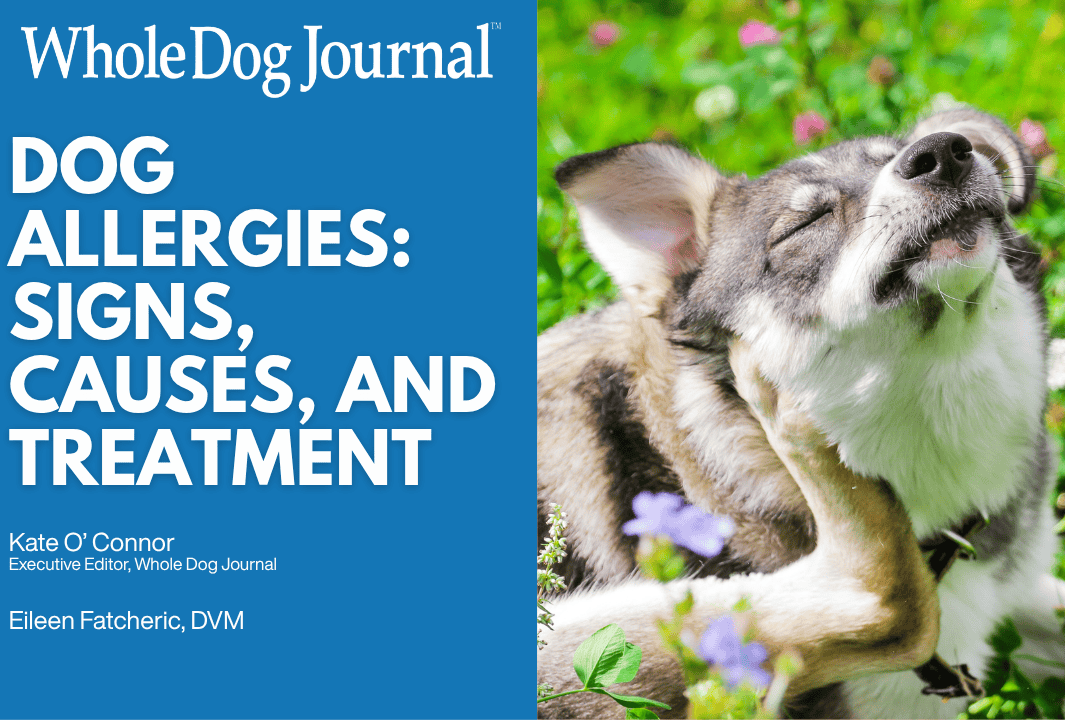
Veterinarian Eileen Fatcheric, DVM, says dog allergies are one of the most common reasons owners bring dogs to the vet. She says today's treatments are safe and effective. She spoke with Whole Dog Journal executive editor Kate O'Connor.
Fatcheric divides dog allergies into two groups: food allergies and environmental (inhaled) allergies, known as atopy. Pinning down the exact environmental trigger is difficult, so vets often treat the itch instead. She says food-allergic dogs tend to itch year-round, while environmental allergies are often seasonal.
She says the hallmark of allergies is normal-looking skin that itches. If a dog shows no lesions, pimples, scabs, or crusts when the itching starts, she treats it as allergies until proven otherwise.
Food allergies cannot be diagnosed by switching bags of food, she says. Vets use a diet trial with either a limited-ingredient diet or a hydrolyzed-protein diet. The trial must run 8 to 12 weeks, with nothing else eaten. Fatcheric admits this is hard in a house with toddlers.
For environmental allergies, blood testing can identify common inhaled allergens.