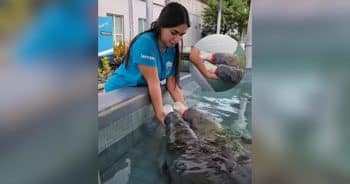
# Two Orphaned Manatees Reach Release After Growing Up Together in Rescue Care
Two orphaned manatees have reached a major milestone after spending months growing stronger together under professional care. Rescuers successfully prepared the pair for return to the wild, marking the culmination of an intensive rehabilitation program.
Manatees, large marine mammals found in shallow coastal waters and rivers throughout Florida and the Caribbean, face serious threats from boat strikes, fishing gear entanglement, and habitat loss. When calves lose their mothers to accidents or disease, they cannot survive independently in the ocean. Orphaned manatees require specialized rescue and rehabilitation to develop the skills and strength needed for survival.
The two calves arrived at a rehabilitation facility after rescue teams found them alone in the water. Young manatees depend entirely on their mothers for nutrition, protection, and behavioral training during their first years of life. Without maternal guidance, orphaned calves face near-certain death without human intervention.
The facility provided the pair with round-the-clock care including specialized formula feeding, veterinary monitoring, and controlled aquatic environments designed to mimic natural conditions. Caregivers worked to help the calves build muscle mass and cardiovascular strength through progressive swimming exercises. The two young manatees formed a close bond during rehabilitation, benefiting from each other's presence as they recovered.
Manatees are highly social animals that naturally live with family groups. Pairing the orphaned calves allowed rescuers to replicate some social elements of natural manatee life. This companionship supported both physical recovery and emotional development, reducing the stress that isolation places on young animals undergoing rehabilitation.
Over the rehabilitation period, veterinary staff conducted regular health assessments to track growth, monitor for infections, and ensure both manatees met release criteria. The team evaluated feeding behavior, swimming ability, body condition, and absence of injury or disease. Both calves progressed on schedule, gaining the weight and skills necessary for independent survival.
Release day represents the successful completion of months of dedicated care. Rescuers transported the manatees to a suitable habitat in warm, shallow waters with adequate vegetation and protection from boat traffic. Release sites receive careful selection based on water temperature, food availability, and safety from human activity.
The successful rehabilitation and release of these two orphaned manatees demonstrates the importance of marine mammal rescue programs. Each manatee returned to the wild represents one more animal given a second chance at life. These rehabilitation efforts also provide valuable research data about manatee development, nutrition, and behavior.
Manatee conservation depends on multiple approaches. Boat operators who observe speed zones and wear polarized sunglasses can avoid striking manatees. Fishermen can remove abandoned nets from waterways. Property owners can protect seagrass beds that provide essential manatee food. Public awareness campaigns help coastal residents understand how individual actions impact these vulnerable animals.
The bond between these two orphaned manatees reminds us that marine life rehabilitation succeeds when animals receive proper medical care, environmental enrichment, and social support. Their journey from rescue to release offers hope for other orphaned manatees entering rehabilitation programs across Florida.