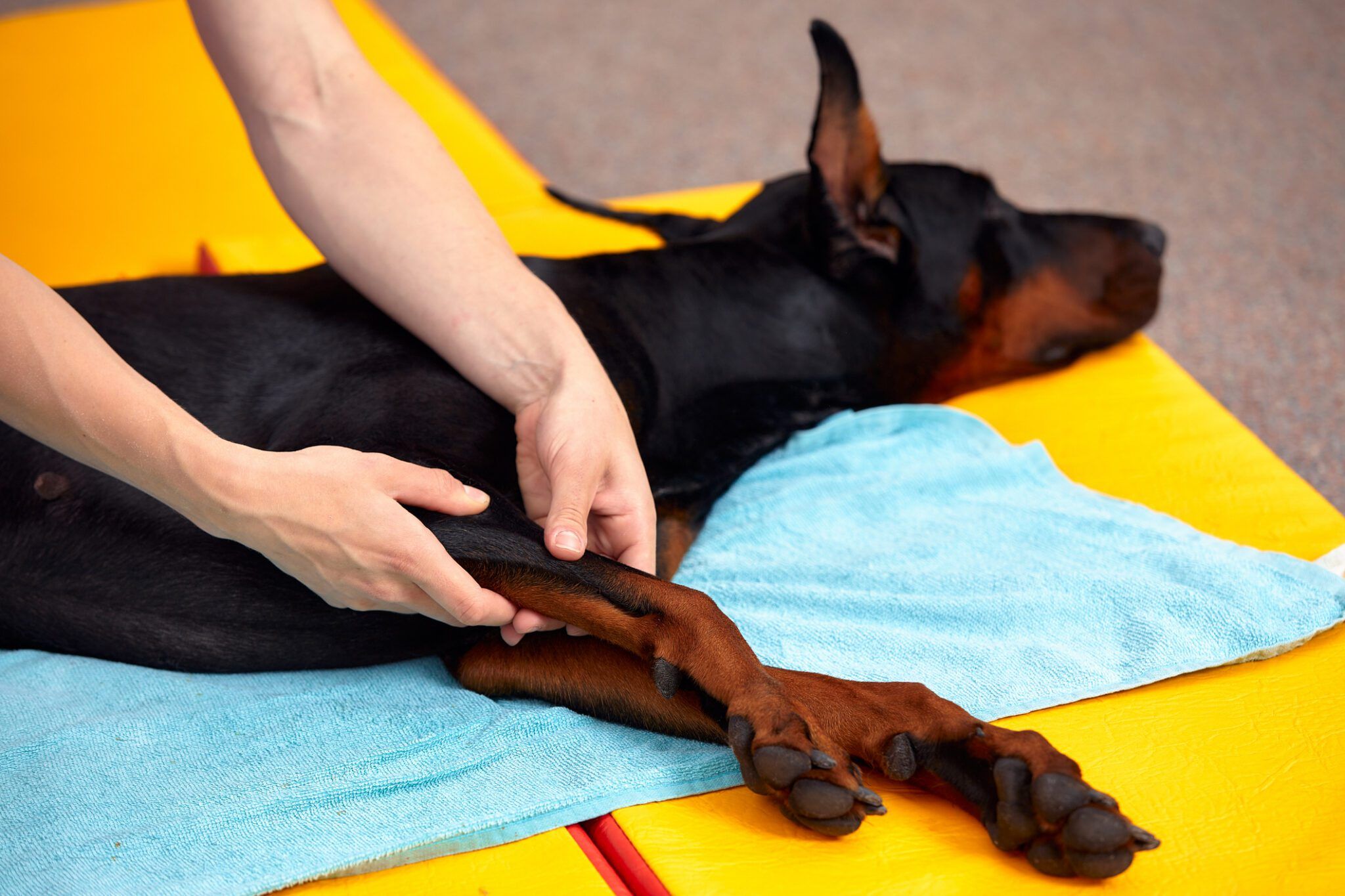
# Gentle Dog Stretching Exercises Can Ease Pain and Improve Mobility for Senior and Athletic Dogs
Dog stretching exercises serve a practical purpose for canine health and mobility. These gentle movements work well before and after exercise, or as part of a daily wellness routine for dogs of all ages.
Senior dogs benefit significantly from stretching routines. As dogs age, their muscles tighten and joints lose flexibility. Regular stretching helps maintain range of motion, reduces stiffness, and can ease discomfort from arthritis and other age-related conditions. A senior dog that struggles to rise from rest or walks with visible stiffness may find relief through consistent, gentle stretching practices.
Active sport dogs also gain from structured stretching programs. Dogs that compete in agility trials, dock diving, running events, or other performance activities place repetitive stress on their muscles and connective tissues. Stretching before activity warms up muscles and prepares the body for exertion. Stretching after activity helps prevent muscle soreness and supports recovery. This pre and post-exercise routine mirrors the approach human athletes use to prevent injury.
Dogs with orthopedic issues benefit most directly from stretching protocols. Dogs recovering from cruciate ligament injuries, dealing with hip dysplasia, managing elbow dysplasia, or experiencing other joint problems often have restricted movement and muscle tightness. Gentle stretching prescribed by a veterinarian or canine rehabilitation specialist can restore mobility, reduce pain, and speed recovery. These exercises address the underlying stiffness that compounds orthopedic problems.
The beauty of dog stretching lies in its simplicity. Most exercises require no equipment and take just minutes daily. Common stretches target the hip flexors, hamstrings, chest muscles, and shoulder regions. A dog positioned in a play bow stretches the rear end. Gentle extension of a front leg stretches the chest. A slow, controlled turn of the head mobilizes neck muscles. These movements mimic natural stretching behaviors dogs perform on their own but deliver them in a controlled, purposeful manner.
Timing matters for effectiveness. Stretching works best when muscles are warm. After a short walk or light play session, muscles are pliable and responsive to gentle lengthening. Never force a dog into a stretch. The goal is mild tension, not pain. A qualified veterinarian or certified canine rehabilitation therapist can demonstrate proper technique specific to your dog's needs and limitations.
Consistency trumps intensity with stretching routines. Five minutes of daily stretching produces better results than occasional longer sessions. Dogs quickly adapt to routine stretches and often look forward to the quiet interaction time with their owners. Many owners report that their dogs seek out their people at the usual stretching time, tail wagging in anticipation.
Starting a stretching routine requires basic knowledge of safe technique. Consulting your veterinarian before beginning ensures the stretches address your dog's specific issues rather than causing harm. This is especially important for dogs with existing injuries or chronic conditions. A professional assessment prevents well-intentioned owners from inadvertently damaging healing tissue or worsening a condition.
Gentle stretching represents a low-cost, accessible way to support dog health throughout life. Whether your dog is a senior moving slowly through their final years, an athlete pushing athletic limits, or managing an orthopedic challenge, stretching can improve quality of life and mobility.