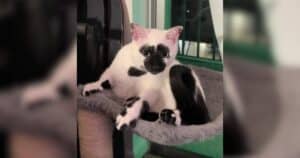
# What Is a Reverse Tuxedo Cat? Genetics, Look, and Meet Mickey
A reverse tuxedo cat is the mirror image of the classic tuxedo feline. While standard tuxedo cats wear predominantly dark coats with white markings on the chest, paws, and face, reverse tuxedos flip this pattern entirely. These cats display primarily white fur with dark patches scattered across their bodies, creating a striking and less common appearance.
The genetics behind reverse tuxedos involves the same white spotting gene that produces traditional tuxedos. This gene, called the S gene (for spotting), determines where pigment appears or disappears on a cat's coat. In reverse tuxedos, the white spotting gene expresses itself more extensively, covering most of the body while leaving islands of the cat's natural color, typically black, gray, orange, or brown.
Reverse tuxedos appear in mixed-breed and purebred populations alike. They lack official recognition as a distinct breed standard with most cat registries, since the pattern results from common genetic variation rather than selective breeding. Yet their striking appearance makes them instantly recognizable to cat enthusiasts.
## The Physical Appearance
A reverse tuxedo cat's coat is predominantly white, often covering 60 to 80 percent of the body. Dark patches appear on the head, back, sides, or tail, creating an asymmetrical pattern unique to each individual. Some reverse tuxedos have small dark spots on an otherwise white face, while others display larger colored patches that resemble a partial cape or cloak across the shoulders and spine.
The white portions of their coat typically extend to the chest, belly, and all four paws. Their eyes, nose color, and ear pigmentation depend on the underlying coat color beneath the white spotting, making each reverse tuxedo cat visually distinct.
## Health and Care Considerations
Reverse tuxedo cats face the same health considerations as any other cat with white spotting patterns. Cats with predominantly white coats, particularly those with white ears, show higher rates of congenital deafness compared to other colors. This occurs because the genes controlling white coloration also affect the development of inner ear structures. Prospective owners should have white or primarily white cats tested for hearing ability early in life.
Otherwise, reverse tuxedos require standard feline care including regular veterinary checkups, appropriate nutrition, and environmental enrichment. Their coat care depends on whether they have short or long fur, though the white portions may show dirt more readily than darker patches.
## Meet Mickey
Individual reverse tuxedo cats like Mickey showcase the variety within this pattern type. Each cat brings its own personality and unique markings to the reverse tuxedo category. Mickey represents countless cats across shelters and homes that display this eye-catching coloration, often overlooked simply because they don't match the more familiar tuxedo pattern most people recognize.
If you encounter a reverse tuxedo cat in a shelter or rescue situation, you are seeing a beautiful example of feline genetic expression. These cats make excellent companions and offer distinctive good looks that set them apart in any household.