# When a Second Cat Isn't the Answer: One Ginger's Rejection of Companionship
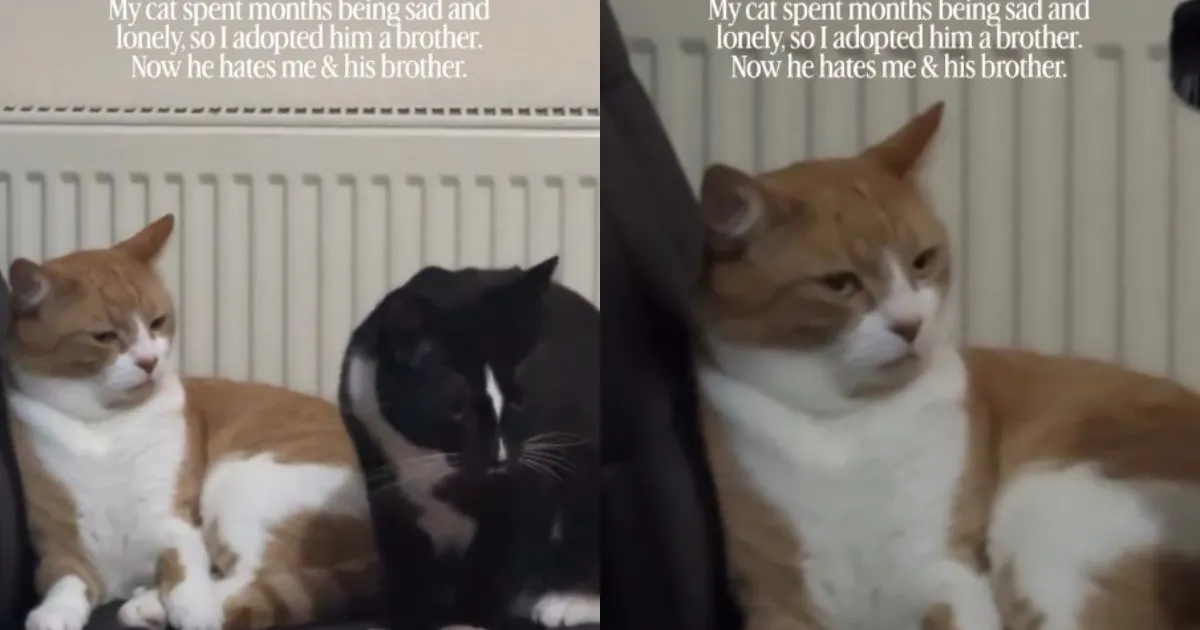
A well-meaning owner learned a hard lesson about feline personalities when introducing a second cat backfired spectacularly. Mango, a ginger cat who appeared withdrawn and unhappy, received a new companion named Mishki, a tuxedo cat. The result was not the bonding story the owner hoped for. Instead, Mango's response made clear he preferred solitude over brotherhood.
The situation unfolded on social media through the @mangoandmishki account, where videos documented Mango's visible displeasure with his new housemate. In one telling clip, Mango sits beside Mishki with an expression of pure disdain, his body language screaming reluctance while Mishki grooms himself contentedly. The text overlay explained that Mango had spent months appearing sad and lonely, prompting the owner to adopt Mishki as a solution.
This scenario plays out regularly in households across the country, and veterinarians and animal behaviorists agree that not all cats benefit from feline companionship. Some cats are genuinely solitary creatures who thrive living alone. Unlike dogs, which are pack animals by nature, cats exist as both social and solitary creatures depending on their individual temperament, early socialization, and personality type.
Introducing a second cat into a single-cat household requires careful planning and gradual acclimation. The process typically involves weeks of separation, scent swapping, and controlled interactions through barriers before face-to-face meetings. Many owners skip these critical steps, assuming cats will naturally get along or that a lonely cat simply needs a friend.
The reality differs significantly. A cat displaying withdrawn behavior may have other underlying issues. Depression in cats can stem from medical problems, environmental stressors, insufficient enrichment, or simply a personality type that prefers human interaction over feline companionship. Adding another cat without addressing root causes often worsens stress for both animals.
Mango's reaction reveals an important truth about cat personalities. Some cats are genuinely aloof loners who express affection selectively and prefer limited social interaction. These cats may be perfectly happy with one human caregiver but actively dislike sharing their space with other animals. Forcing cohabitation creates chronic stress, which leads to behavioral problems, health issues, and unhappiness for all residents.
For owners with seemingly lonely cats, veterinary behaviorists recommend a different approach. Environmental enrichment addresses many cases of feline depression. Vertical spaces like cat trees, window perches for bird watching, puzzle feeders, interactive play sessions, and one-on-one human attention often resolve apparent loneliness far more effectively than a new cat companion.
A veterinary consultation should precede any decision to add a second cat. Vets can rule out medical conditions causing lethargy or social withdrawal. They can also assess the resident cat's personality type and recommend whether companionship would genuinely help or harm.
Mango's story serves as a cautionary tale. Not every lonely-looking cat needs a brother. Some cats simply need more stimulation, better healthcare, or acceptance of their solitary nature. Owners who notice withdrawn behavior should consult their veterinarian before assuming a second pet is the solution. Understanding individual cat personalities prevents well-intentioned decisions from creating household conflict and stress.