# The Bite Stuff: Understanding Why Cats Nip and How to Respond
Cats bite their owners for reasons that have nothing to do with aggression or spite. Understanding the cause behind these sudden nips helps owners respond appropriately and protect both themselves and their cats.
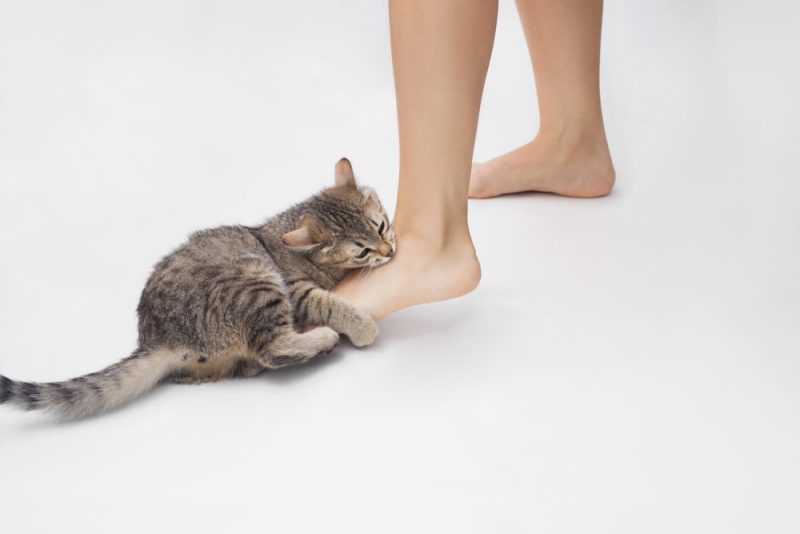
Cats communicate through biting in several distinct ways. Play biting occurs when cats redirect their hunting instincts onto human hands and feet. Kittens learn bite inhibition from their littermates during play, but cats raised without siblings or those removed from their mothers too early often miss this crucial lesson. These cats may bite harder than necessary because they never learned where the line between play and pain falls.
Overstimulation triggers another common type of bite. Cats have finite tolerance for petting and handling. Extended play sessions, long grooming periods, or repeated touching in sensitive areas like the tail base and belly can push cats past their comfort threshold. When cats reach this point, they communicate the only way they know how. A sudden nip signals they need space immediately.
Medical issues drive some biting behavior. Cats experiencing pain from dental disease, arthritis, or skin conditions may bite when touched in affected areas. Owners should consult their veterinarian if a cat's biting behavior changes suddenly or increases in frequency. A physical examination can rule out underlying health problems that require treatment.
Fear and defensive behavior produce bites as well. Cornered cats, cats startled from sleep, or those protecting kittens will bite to defend themselves. These bites carry genuine anger and occur only when cats feel trapped. Understanding the context helps owners recognize whether a bite reflects aggression or fear.
Environmental stress contributes to biting too. Changes like moving to a new home, introducing new pets or people, or loud noises can make cats irritable and quick to bite. Providing hiding spaces, maintaining routines, and using calming products like Feliway can help stressed cats feel secure.
Responding to cat bites matters for both parties. When a cat nips during play, owners should stop the interaction immediately. Yelping, pulling away, or punishing the cat teaches nothing useful. Instead, ending playtime works better. Redirect the cat's energy toward appropriate toys like wand toys or laser pointers that create distance between human skin and feline teeth.
For overstimulation bites, owners should learn their individual cat's tolerance level. Most cats show warning signs before biting. Ear position changes, tail swishing, or skin twitching all indicate mounting frustration. Stopping petting when these signals appear prevents bites altogether.
Cat bites break the skin easily and carry bacteria. The CDC recommends washing bite wounds with soap and water, applying antibiotic ointment, and monitoring for signs of infection. Cat bites that show warmth, increasing redness, or discharge need veterinary attention, as cats' teeth create puncture wounds prone to serious infections.
Some cats bite more than others based on personality and history. Early socialization reduces aggressive tendencies. Consistent, gentle handling teaches cats that human contact feels safe. Regular play sessions with appropriate toys exhaust predatory instincts and make cats less likely to hunt hands.
Working with a feline behavior specialist helps owners who face persistent biting problems. These professionals assess individual situations and create tailored plans to reduce unwanted behavior while maintaining the human-cat bond.