# Rescued Kitten Named Dolly Displays Stunning Multicolored Coat Pattern
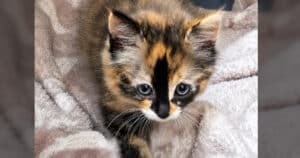
A rescued kitten named Dolly has captured hearts with her extraordinary coat displaying a rare patchwork of colors and patterns. The feline's unique appearance stems from chimerism, a genetic condition where an animal develops from two separate fertilized eggs that fuse together during embryonic development.
Dolly's coat showcases distinct sections of different colors and markings, creating what observers describe as a "coat of many colors." Each side of her body displays different coloring, a visual phenomenon that occurs when two distinct genetic blueprints merge into one organism. In cats, this creates striking calico-like or tortoiseshell patterns that appear asymmetrical and highly unusual compared to typical feline coat patterns.
The rescued kitten came into care through animal rescue efforts, where her distinctive appearance immediately drew attention. Rescue workers recognized that Dolly's unique look made her a compelling ambassador for adoption. Her story highlights how cats with unusual physical traits often find homes through viral social media attention and human interest in their distinctiveness.
Chimerism in cats remains relatively rare but not unheard of among feline populations. The condition does not typically affect the cat's health or behavior. Dolly functions as a normal, healthy kitten despite her striking appearance. She experiences no pain, mobility issues, or behavioral complications related to her genetic makeup.
The rescue community has leveraged Dolly's visual uniqueness to promote cat adoption awareness. Her photos circulating on social media platforms generate engagement and remind potential adopters that cats come in all appearances and that unique-looking animals deserve loving homes just as much as conventionally patterned cats.
Dolly's case provides an educational opportunity for pet owners and cat enthusiasts to learn about feline genetics and developmental biology. Her existence demonstrates the remarkable variation possible within cat reproduction and shows how nature produces animals that defy standard breed expectations and aesthetic categories.
For the rescue organization caring for Dolly, her presence serves practical purposes beyond pure entertainment value. Viral stories about rescued animals like Dolly drive foot traffic to shelters and adoption events. They shift public perception about rescue cats and demonstrate that shelter animals often possess remarkable stories and distinctive characteristics worthy of celebration.
The kitten's journey from rescue to potential adoption illustrates broader trends in animal welfare communication. Social media platforms amplify stories about exceptional animals, converting individual rescue cases into community engagement opportunities. Dolly's "coat of many colors" transforms her from a statistic in rescue statistics into a recognizable individual with her own narrative and identity.
As Dolly grows, her coat pattern will remain stable, providing her adoptive family with a lifetime of visual reminders about feline genetic diversity. Her unique appearance will never change, making her instantly identifiable and memorable to anyone who meets her. The combination of her striking looks and rescue background makes her the type of cat whose adoption generates feel-good stories that resonate across social media channels and local news outlets.