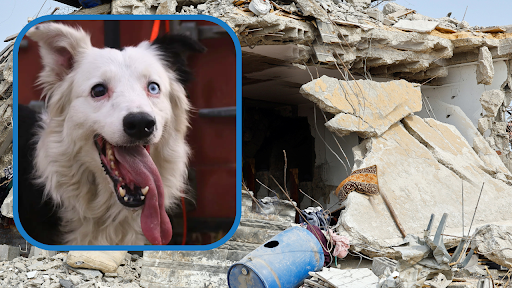
# From Rescue to Rescuer: How an Abandoned Border Collie Became Venezuela's Earthquake Hero
A Border Collie pulled from abandonment has transformed into one of Venezuela's most valuable disaster response assets, demonstrating the remarkable potential that lies dormant in rescue dogs waiting for their second chance.
The dog's journey began in hardship. Abandoned and left to fend for itself, this Border Collie faced an uncertain future typical of countless strays across Venezuela. Rescue workers discovered the animal and recognized something beyond the matted coat and signs of neglect. They saw intelligence, drive, and the physical capabilities that make Border Collies exceptional working dogs. The breed's natural herding instincts, keen awareness, and athletic build often translate perfectly into search and rescue operations.
What followed was a transformation. The Border Collie entered a specialized training program designed to convert rescue dogs into earthquake detection and victim location specialists. These programs require dogs with specific traits: high prey drive adaptable to search work, strong focus and recall, and the physical stamina to work in dangerous, debris-filled environments. Border Collies excel at all three.
The dog's work in Venezuelan earthquake response showcases how rescue animals can pivot to rescuer roles. After major seismic events struck the region, this Border Collie participated in search operations where trained detection dogs prove invaluable. These animals can cover ground faster than human rescue teams, navigate unstable rubble, and identify human scent markers buried under tons of debris. A single dog working effectively can mean the difference between recovery and loss.
Training earthquake response dogs involves months of intensive conditioning. Handlers teach the animals to recognize human scent, navigate hazardous terrain, and signal discoveries to their teams. Dogs learn to distinguish between live victims, deceased individuals, and residual human scent in structures. The work demands physical toughness and psychological resilience. Dogs must remain calm in chaotic, noisy environments filled with unfamiliar people and unstable footing.
This Border Collie's story resonates beyond statistics. It reflects how rescue organizations across Latin America and globally recognize that second-chance dogs often possess untapped potential. Many abandoned dogs come from working breeds or mixed backgrounds with strong drive and intelligence. Rather than remaining in shelter systems indefinitely, these animals can receive task-specific training that saves human lives while giving the dogs themselves purpose and belonging.
Venezuela's natural disaster preparedness infrastructure increasingly relies on trained canine teams. The country faces ongoing seismic risk, and earthquakes have devastated communities in recent years. Having reliable search and rescue dogs becomes essential when human resources remain stretched thin and technology access limited.
The Border Collie's transition from rescue to rescuer represents one of the most meaningful outcomes possible in animal welfare. The dog receives proper care, socialization, and work suited to its natural abilities. Communities receive expert disaster response support. The bond between handler and dog deepens through shared mission-critical work.
This story challenges assumptions about "damaged" rescue dogs and reminds us that abandonment reflects human failure, not animal capability. Somewhere in a Venezuelan community affected by earthquakes, this once-abandoned Border Collie continues its critical work, finding survivors and reuniting families. That's the power of second chances.