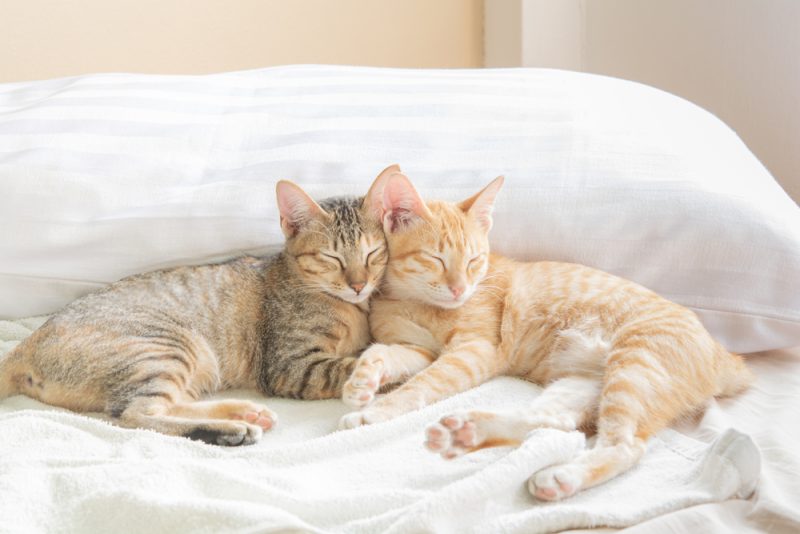
# Does Your Cat Need A Friend? How to Tell If Your Cat Is Lonely
Cats display distinct behavioral signs when they experience loneliness, and recognizing these signals helps owners decide whether a second cat might improve their pet's quality of life.
Lonely cats often become overly vocal, meowing more frequently than usual or following their owners from room to room seeking constant attention. They may also display destructive behaviors, scratching furniture excessively or knocking objects off shelves out of boredom rather than typical feline mischief. Some lonely cats eat more than normal or show reduced appetite, both stress responses to isolation.
Other telltale signs include decreased activity levels, excessive sleeping beyond the typical 12 to 16 hours cats require, or conversely, hyperactivity and restlessness. A lonely cat might groom excessively or stop grooming altogether. Some cats withdraw from family members or, conversely, become clingy and demand immediate interaction whenever humans are home.
Age matters when evaluating loneliness. Young cats under five years old typically benefit from feline companionship, while older cats above ten years may resist a new housemate. Cats with prior positive experiences with other cats adjust better to a multicat household than those raised as only cats.
Before introducing a companion, assess your cat's personality. Outgoing, playful cats adapt more readily to a second cat than anxious or territorial ones. Proper introduction techniques matter enormously. Place the new cat in a separate room for several days, allowing both cats to smell each other under doors. Gradually increase supervised interaction time over weeks.
Not all lonely cats need another cat. Some respond well to enrichment strategies instead, including interactive toys, window perches for bird watching, puzzle feeders, and increased playtime with their owners. Cat TV videos or background music designed for felines can provide comfort.