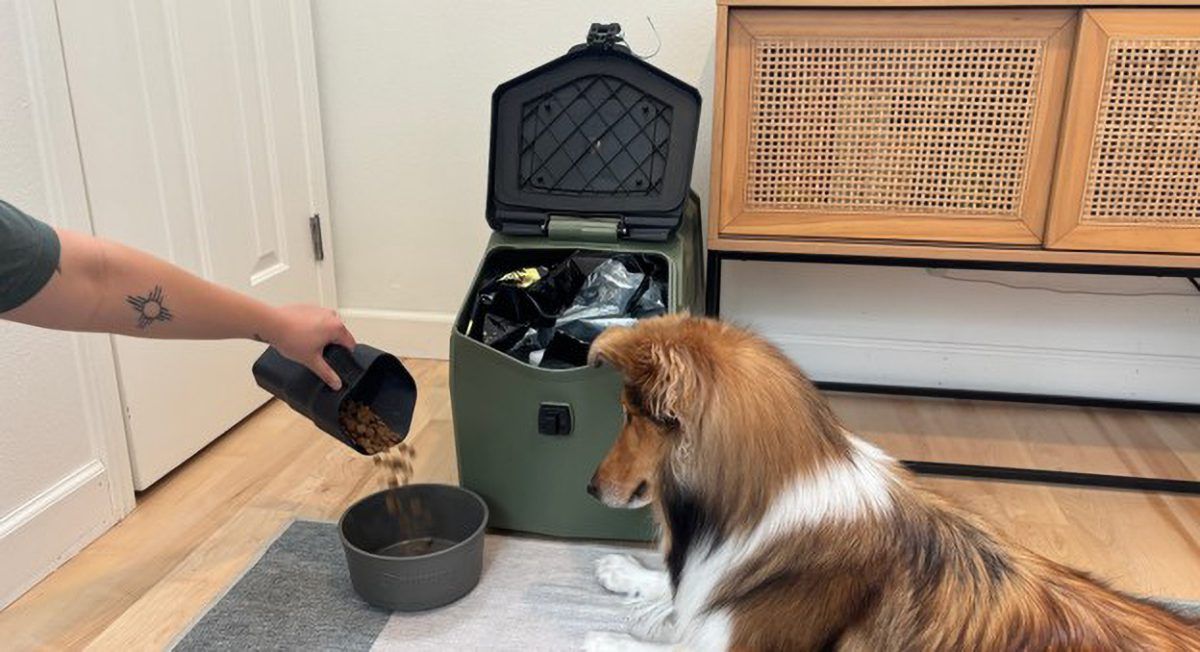
Dog food storage containers solve a common household problem. Open bags of kibble attract moisture, insects, and odors while cluttering pantries and garages. Airtight storage containers keep dog food fresh longer and protect it from environmental damage.
The best containers feature tight-sealing lids that block air and humidity. This matters because exposure degrades nutrients in kibble and creates conditions where mold and bacteria grow. Containers also organize your space by replacing bulky, open bags with compact, stackable options.
When choosing a storage container, look for these features. The container should hold your dog's full bag of kibble or at least a week's worth of food. Durable plastic resists cracking and staining from oils in the food. A secure latch or snap-lock lid keeps pests out. Clear sides let you monitor food levels without opening the container.
Size matters based on your dog's weight and feeding schedule. A small dog eating two cups daily needs less storage than a large dog consuming six cups. Most quality containers hold between ten and fifty pounds of dry food.
Food-grade plastic is essential for pet safety. Avoid containers with BPA or other chemicals that leach into kibble over time. Many pet supply companies design containers specifically for dog food, ensuring they meet safety standards.
Pet owners report that containers reduce waste and save money. Fresh food lasts longer, which means fewer trips to buy replacement bags. Organization also helps track feeding schedules more easily, particularly in households with multiple dogs eating different foods.
Store containers in cool, dry places away from direct sunlight. Pantries and garages work well as long as temperatures stay stable. Extreme heat or cold can still damage kibble even in sealed containers, so avoid attics or unheated spaces.
Investing in proper storage containers protects your dog's nutrition and keeps your home tidy. The containers typically cost between