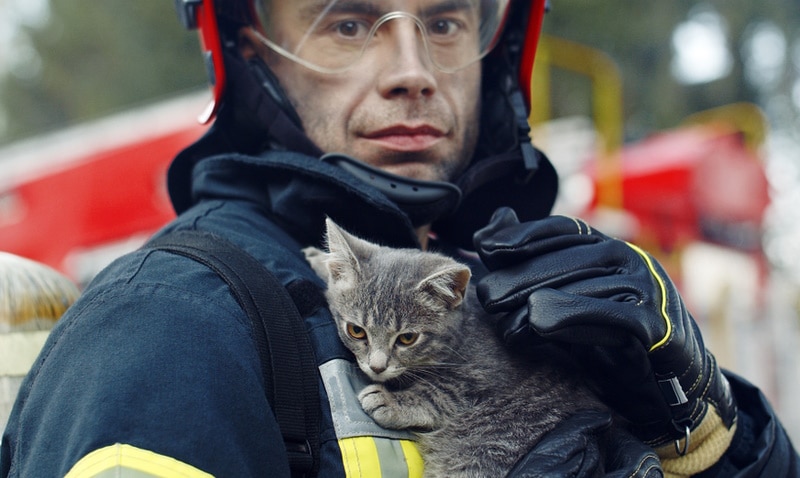
A former fast food worker has transitioned into emergency animal rescue, demonstrating how career changes can align personal passion with community service. The individual now works alongside firefighters and first responders to locate and assist cats and other animals in distress situations.
This shift reflects a growing recognition within emergency services that trained personnel dedicated to animal rescue fills a critical gap. When cats become trapped, injured, or lost during fires, floods, or other emergencies, specialized responders trained in animal handling make a difference in survival rates.
Firefighters increasingly partner with animal rescue specialists during emergency calls. These professionals understand feline behavior, stress responses, and safe handling techniques. A frightened or injured cat may hide, scratch, or bite when scared. Trained rescuers know how to approach animals calmly, use proper restraint methods, and assess injuries before transport to veterinary care.
The work involves more than just physical rescue. Personnel must locate animals in dangerous environments, navigate smoke-filled spaces, and determine when animals need immediate veterinary attention. Many cats suffer from smoke inhalation, burns, or shock during fires. Quick assessment and transport to an emergency veterinary clinic can mean the difference between recovery and death.
This career path opens opportunities for people who love animals but may not have traditional veterinary training. Fast food experience taught time management, customer service, and working under pressure. Those same skills transfer to high-stress rescue situations where quick decisions save lives.
Communities benefit when emergency responders receive additional animal rescue training. Cats represent the most common pets in American households, yet many fire departments initially focused primarily on human rescue. Adding animal-specific protocols ensures no lives slip through the cracks during crises.
The example shows how compassion for animals can reshape a career trajectory. Whether someone starts in service industry work or elsewhere, opportunities exist to redirect skills toward animal welfare. For cat owners facing emergencies, knowing their local fire department includes trained