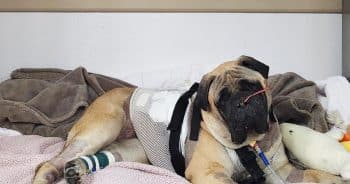
A Bullmastiff survived severe injuries after being struck by a tractor, emerging from a month-long hospitalization to return home with its family.
The large dog suffered multiple traumatic injuries from the accident but responded well to intensive veterinary care. During the extended hospital stay, veterinarians treated the Bullmastiff's wounds and managed complications from the blunt force trauma. The breed's substantial frame and muscular build likely contributed to the dog's survival, though recovery demanded round-the-clock monitoring and intervention from the veterinary team.
Bullmastiffs are large dogs that typically weigh between 100 and 130 pounds. Despite their size and strength, they remain vulnerable to serious accidents. Tractor incidents pose particular danger because of the heavy machinery's weight and the speed at which injuries occur. The Bullmastiff's successful recovery underscores the importance of prompt emergency veterinary care following traumatic accidents.
The dog's owner faced difficult decisions during the hospitalization process. Extended veterinary stays for trauma cases accumulate substantial costs, and the outcome remained uncertain during early treatment phases. However, the veterinary team's expertise and the dog's resilience combined to produce a positive result.
Recovery from tractor injuries typically involves addressing fractures, internal bleeding, and soft tissue damage. Physical rehabilitation plays a critical role in helping dogs regain mobility and function after hospitalization. The Bullmastiff will likely require ongoing care and monitoring to ensure full healing.
This case serves as a reminder for pet owners to supervise dogs around machinery and vehicles. Keeping dogs away from active farm equipment and construction sites dramatically reduces the risk of similar accidents. Pet owners should also know that emergency veterinary clinics offer specialized trauma care that can save lives when accidents happen.
The Bullmastiff's recovery demonstrates both the resilience of dogs and the lifesaving capabilities of modern veterinary medicine when