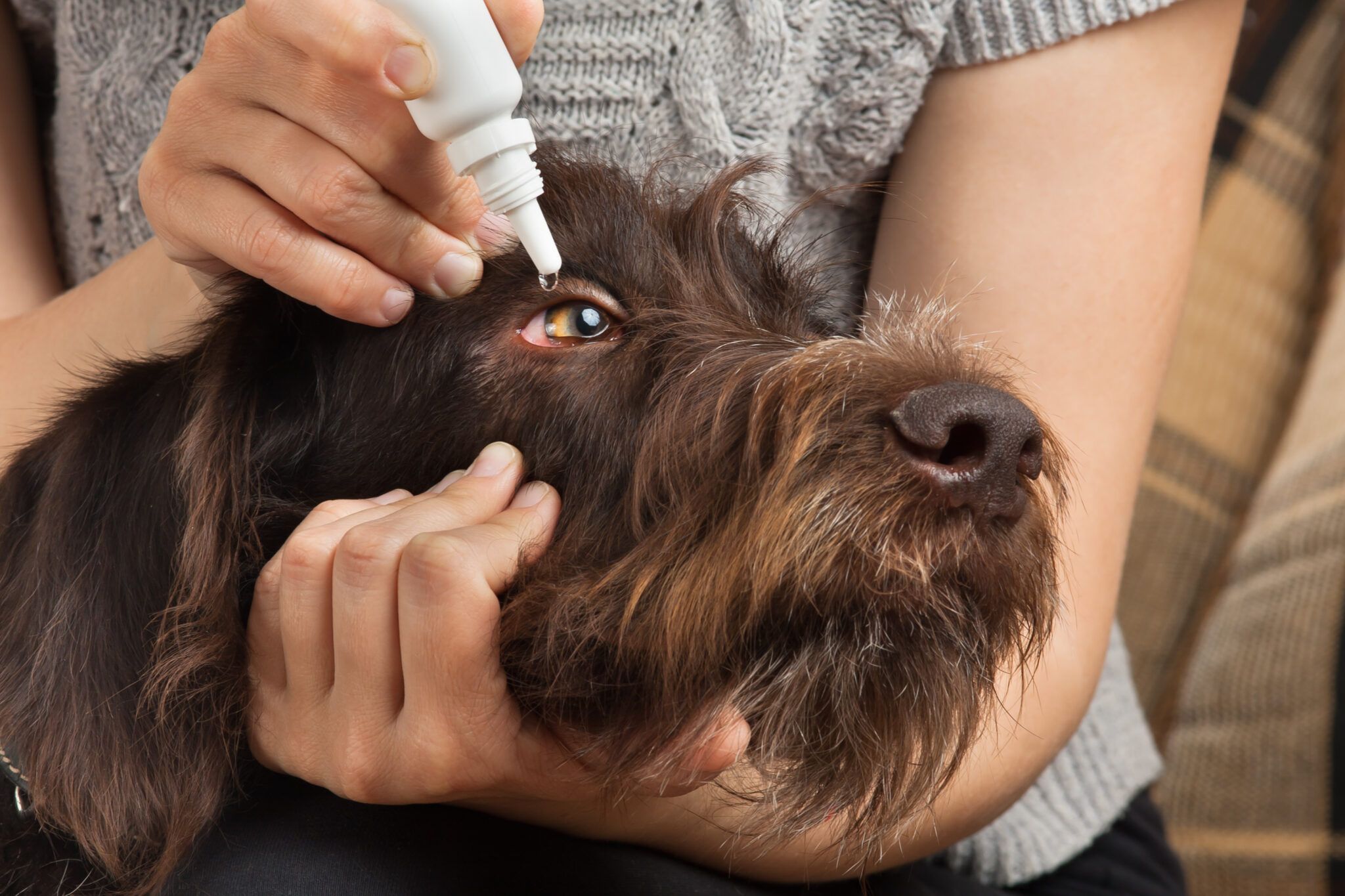
Human eye drops intended for people carry serious risks for dogs and should never be applied to your pet's eyes without veterinary guidance.
Many human eye drops contain active ingredients that trigger dangerous reactions in dogs. Visine, a popular decongestant drop, can cause life-threatening cardiovascular and neurologic problems in canines. Other formulations designed for people may worsen existing eye conditions or create new health complications in your dog.
The safest at-home options for dogs remain limited. Saline drops, artificial tears, and warm tap water are the only choices you can use without a prescription. Saline drops mimic natural tears and help flush irritants. Artificial tears designed for dry eye relief provide temporary comfort. Warm tap water works for gentle cleansing.
If your dog's eyes appear irritated, cloudy, discharge-filled, or swollen, contact your veterinarian before applying anything. These signs point to infections, allergies, injuries, or other conditions requiring professional diagnosis. A vet will identify the underlying problem and prescribe dog-safe medicated drops if needed.
The temptation to reach for your own eye drops at home understandably arises when your dog seems uncomfortable. Self-treatment without veterinary approval risks masking serious conditions while potentially poisoning your pet. Some dogs may experience allergic reactions to ingredients safe for human eyes but harmful to canine tissues.
Your vet can recommend prescription eye drops formulated specifically for dogs or suggest safe over-the-counter alternatives appropriate for your dog's particular situation. They can also teach you proper application techniques to prevent contamination and ensure the drops reach the affected area.
Keep all human medications, including eye drops, stored safely away from pets. If your dog has accidentally ingested or had human eye drops applied, call your veterinarian or animal poison control immediately with the product name and ingredients.