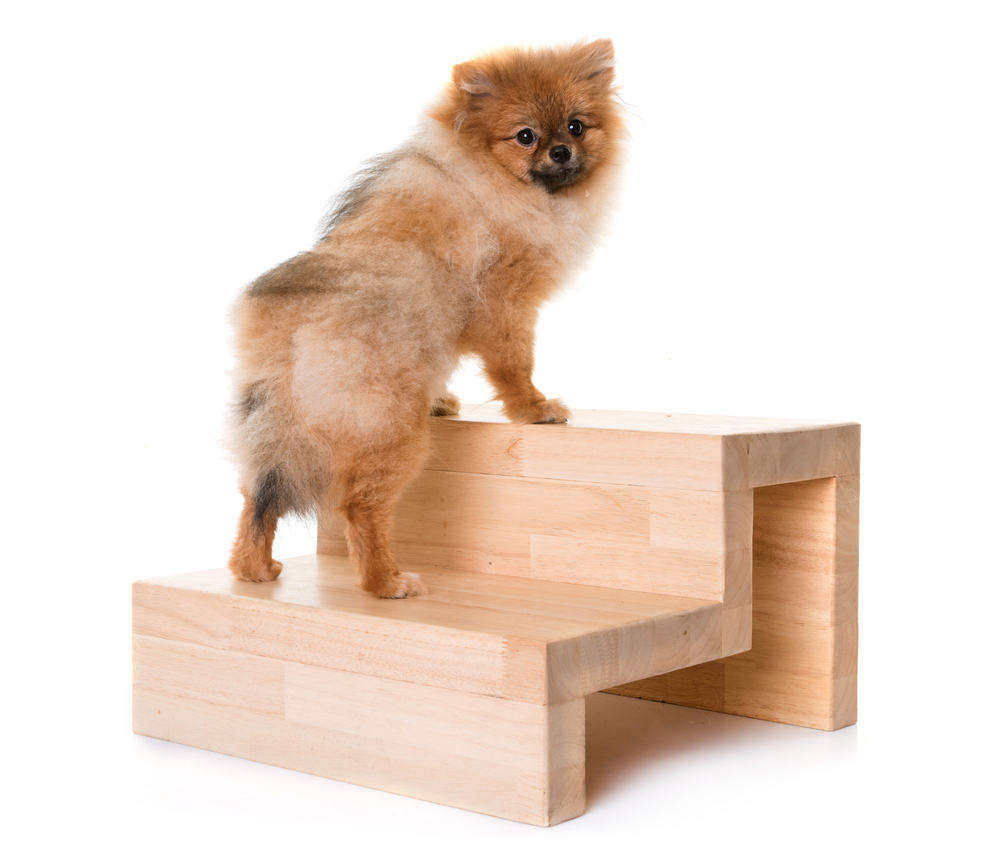
Small dogs and senior dogs with arthritis or other mobility issues struggle to jump onto furniture and climb stairs. Dog stairs solve this problem by providing safer access to beds, couches, and elevated spaces throughout your home.
Veterinarians recommend dog stairs for breeds like Dachshunds, Corgis, and Chihuahuas that have short legs and longer spines prone to intervertebral disc disease (IVDD). Dogs with arthritis, hip dysplasia, or recent surgery benefit from reduced jumping strain on their joints. Even young dogs can develop back problems from repeated high impacts.
DIY dog stairs offer affordable alternatives to commercial pet steps. Pet owners can build ramps using wood, carpet-covered plywood, or soft foam wedges. Stacked cushions, storage ottomans, or plastic storage boxes covered with carpet create budget-friendly options. The key is ensuring stability. Stairs must not shift or slide when dogs walk on them, which risks injury and discourages use.
When designing dog stairs, match the step height to your dog's leg length. For a Dachshund or Corgi, steps should be 4 to 6 inches high. Wider treads (at least 12 inches) prevent missteps. Soft surfaces like carpet or non-slip pads prevent slipping on hardwood floors. Some owners create gradual ramps rather than steep steps for arthritic dogs.
Placement matters too. Position stairs at your couch, bed, or favorite elevated resting spots. Dogs learn to use stairs quickly with encouragement. Reward your dog with treats when they use the steps to build positive associations.
Before building, assess your dog's specific needs. Overweight dogs and those with severe arthritis may need gentler angles than healthy young pups. If your dog shows signs of pain, reluctance to move,