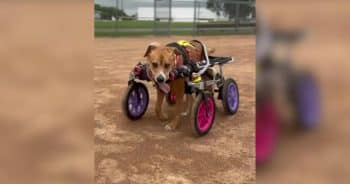
# Wobbly Hannah Shows the World That Happiness Doesn't Depend on Perfect Balance
Hannah, a dog with cerebellar hypoplasia, has become an inspiration to pet owners everywhere. This neurological condition affects balance and coordination, causing the characteristic wobbly gait that gives Hannah her distinctive way of moving.
Cerebellar hypoplasia occurs when a dog's cerebellum, the brain region controlling balance and motor coordination, fails to develop fully. The condition is typically present from birth and does not worsen or improve over time. Dogs with cerebellar hypoplasia experience tremors, unsteady walking, and difficulty with precise movements, yet they remain fully capable of enjoying life.
Hannah's story resonates because it challenges common assumptions about disability in pets. Despite her neurological condition, Hannah displays joy, playfulness, and affection just like any other dog. Her owners have documented her daily activities, showing how she navigates her environment with determination and happiness.
Veterinarians confirm that cerebellar hypoplasia does not cause pain. Dogs with this condition live normal lifespans and experience no cognitive decline. The primary concern involves adapting the home environment to ensure safety. Pet owners should provide non-slip flooring, remove obstacles, and supervise outdoor activities to prevent injuries from falls.
Social media has amplified Hannah's message. Videos and photos of her playing, eating, and interacting with her family demonstrate that physical limitations do not define a pet's quality of life. Her story encourages adopters to consider dogs with special needs, showing that disabilities do not diminish a dog's capacity for love and companionship.
Hannah's popularity serves a practical purpose beyond inspiration. Her visibility helps educate the public about cerebellar hypoplasia and other neurological conditions in dogs. Pet owners who recognize symptoms in their own animals learn what to expect and how to provide appropriate care.