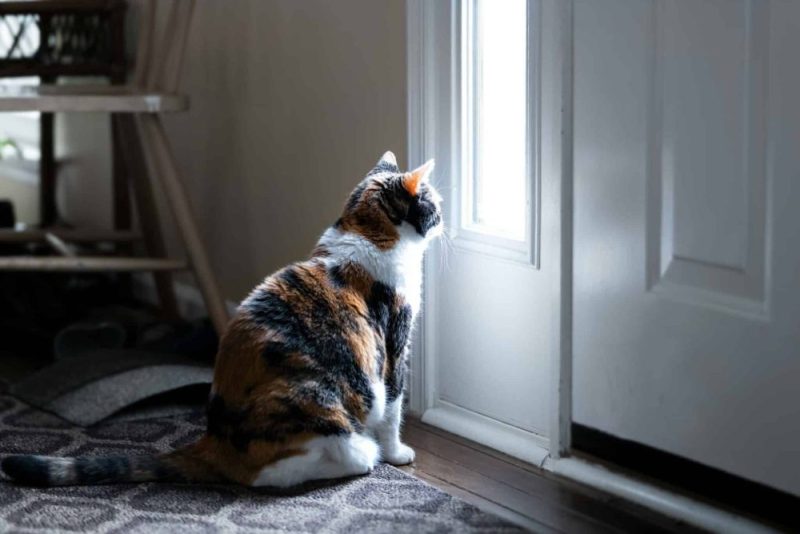
Cats often station themselves by doors and windows without actually leaving the house, and this behavior reveals much about how they experience their homes and territories.
Cats view doorways as boundaries between different territories. When your cat sits by the door, they monitor what happens beyond their safe indoor space. This surveillance serves multiple purposes. They watch for potential threats, track outdoor activity, and maintain awareness of their expanded territory even though they remain inside.
The threshold itself acts as a psychological and physical barrier. Cats recognize doors as gatekeepers to the unknown. Many indoor cats feel conflicted about crossing that boundary, even when given the opportunity. The outdoor world presents unpredictability that challenges their need for control and safety. Your cat may want to observe and engage with outdoor stimuli without accepting the genuine risks.
Sensory stimulation drives this behavior strongly. Doors concentrate interesting smells, sounds, and visual movement. Your cat experiences the neighborhood through these openings. Birds, insects, other animals, and changing weather all create a dynamic sensory environment that entertains and engages indoor cats.
Cats also use doorways as social observation posts. They monitor their human family members coming and going. Some cats display greeting behavior at doors, anticipating returns or departures. This position keeps them connected to household activity and the wider world.
Boredom and curiosity fuel persistent door-sitting. Indoor cats with limited environmental enrichment gravitate toward these windows on the outside world. They rehearse hunting behaviors by watching prey species. They gather information about seasonal changes and weather patterns.
Safety concerns often prevent actual door crossing. Indoor cats raised without outdoor exposure typically feel anxious about open spaces, vehicle traffic, unfamiliar animals, and extreme weather. The window on possibility feels safer than full participation.
Offering window perches, cat TV videos, and other enrichment activities helps satisfy this urge to engage with the outside world. Some owners