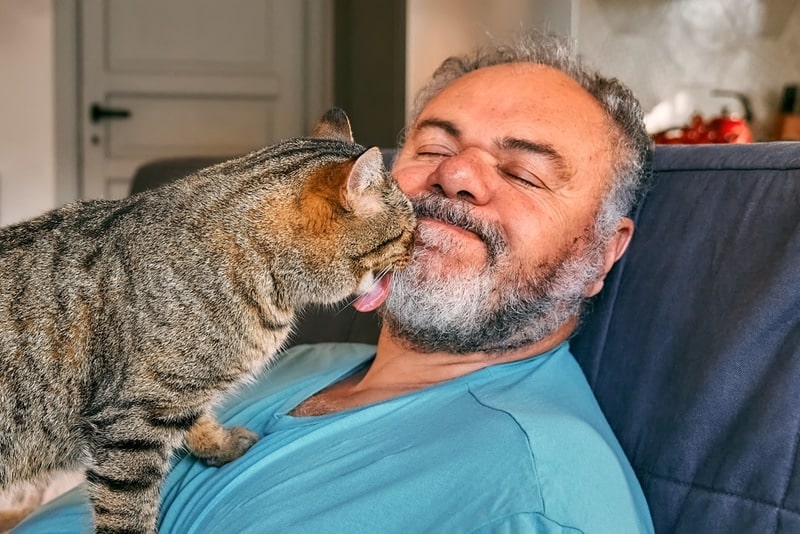
Cats that invade your personal space and ignore boundaries are actually showing you affection and trust. When your cat rubs against your face, sits on your lap uninvited, or follows you from room to room, they're not being disrespectful. They're demonstrating bonding behaviors that strengthen your relationship.
Feline boundary-crossing serves several purposes. Cats mark their owners with scent glands located on their face and body, claiming you as part of their family unit. This behavior signals that your cat considers you a safe, trusted companion. Cats that maintain distance typically feel less secure or bonded with their humans.
Physical closeness also helps cats regulate their stress levels. When your cat curls up on your chest or walks across your keyboard while you work, they're seeking comfort and security. Your presence calms them. Similarly, your cat's proximity provides you with measurable health benefits. Studies show that cat owners experience lower blood pressure and reduced anxiety when their cats sit near them.
The classic "personal space invasion" behaviors include head bunting, where cats rub their foreheads on your face or hands. This marks you with their scent and indicates they view you as a family member. Lap sitting, bed sleeping, and following you into bathrooms all communicate attachment and trust.
Rather than discouraging these boundary-free behaviors, embrace them as signs of a healthy bond. Your cat trusts you enough to be vulnerable and close. When your cat sleeps on your pillow or demands your attention while you eat, they're not misbehaving. They're expressing their need for connection.
This doesn't mean cats lack independence. Cats balance alone time with intense bonding moments. When your cat chooses to invade your space, they're actively selecting you as their preferred companion. This voluntary closeness matters far more than respecting invisible boundaries.
If your cat ignores your