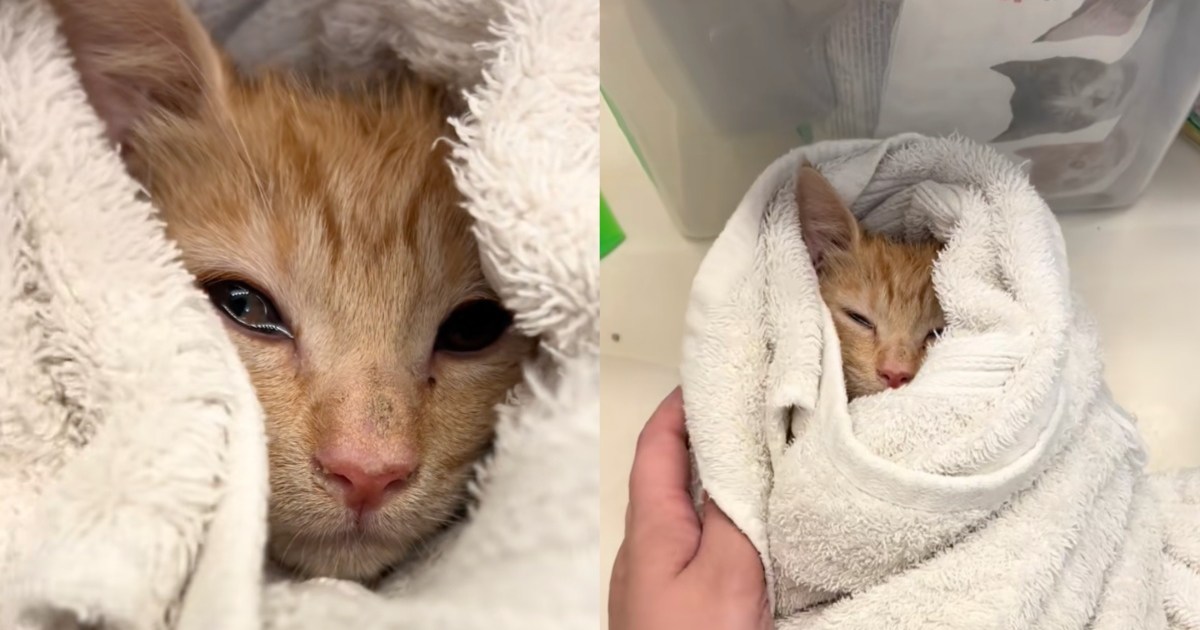
A rescue kitten named Beatrice captured hearts across social media when her caregiver documented the exact moment she realized she was finally safe. The Instagram account @phoenixferals, which documents the journeys of feral and at-risk cats, shared the viral video showing Beatrice's transformation.
Feral and semi-feral kittens often struggle with trust and fear when first rescued. They arrive traumatized, uncertain of human touch, and overwhelmed by indoor environments. Beatrice's story reflects what many rescue workers see repeatedly. These young cats carry stress from survival on the streets or in colonies. They need time, patience, and consistent safety to understand that humans can provide care rather than threat.
The video resonates because it captures something real about rescue work. Observers witness the exact behavioral shift when a frightened kitten's nervous system finally relaxes. Beatrice's body language changed noticeably as she experienced comfort from her caregiver. Her pupils dilated less. Her ears oriented forward. Her muscles loosened. These signals show a kitten moving from survival mode into a state where she could accept affection.
@phoenixferals documents these transitions regularly, helping followers understand how feral cats adapt to domestication. The account shows that socialization takes time. It requires quiet spaces, predictable routines, and gentle handling. Most feral kittens under eight weeks old can become fully tame with proper care. Older felines may remain semi-feral but develop trust with dedicated caregivers.
Rescue organizations emphasize that feral cats deserve the chance to decompress in safe environments. Many shelters now offer "feral to friendly" programs where experienced staff work with unsocialized cats over weeks or months. Success rates climb dramatically when patience outweighs pressure.
Beatrice's moment of realization speaks to something larger about rescue work. Every