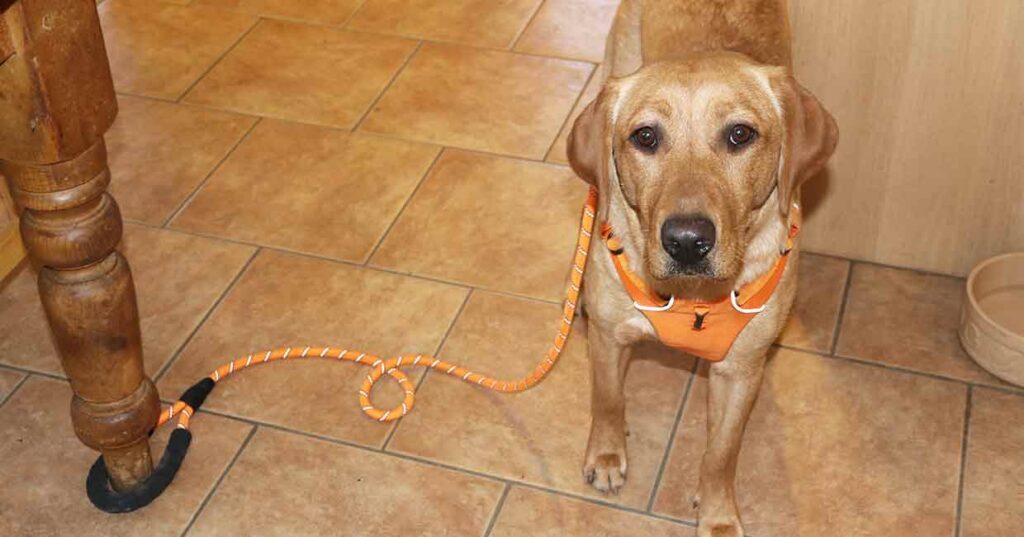
# The Pros and Cons of Tethering a Dog
Tethering conjures different images for different dog owners. Older generations often remember lonely dogs chained in yards, left to guard property without meaningful human interaction. Modern tethering practices, however, look quite different from those neglectful setups.
Contemporary tethering uses secure lines or cables that allow dogs temporary outdoor access while remaining safely contained. Responsible owners employ this method for short periods during yard time, preventing escape while supervising their pets. The practice works best for dogs with reliable recall training and stable temperaments.
The benefits exist within narrow parameters. Tethering provides a contained outdoor space without requiring a fully fenced yard. Dogs get fresh air, mental stimulation from sights and sounds, and bathroom breaks while staying secure. For homeowners unable to install fencing, this offers a practical temporary solution.
However, extended tethering carries real risks. Dogs left tethered for hours experience isolation, frustration, and stress. Tangled lines create safety hazards. Longer chains sometimes encourage aggressive behavior or fence aggression as dogs pace and develop territorial patterns. Weather exposure poses dangers. Dogs cannot escape threats or reach water and shelter reliably.
Psychological impacts matter. Dogs are social pack animals requiring regular human interaction. Prolonged tethering without companionship leads to behavioral problems including destructive habits, anxiety, and aggression. Young puppies and energetic breeds suffer particularly under these conditions.
Veterinarians and animal behaviorists generally oppose long-term tethering. The American Veterinary Medical Association recognizes it as inadequate for dogs' social and exercise needs. States like Connecticut and Maryland have restricted the practice through legislation.
The verdict depends on duration and context. Brief supervised tethering while an owner monitors from nearby differs dramatically from all-day confinement. Dogs need regular, scheduled