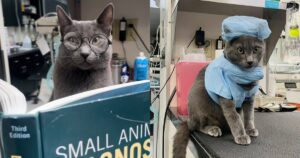
Dr. George, a domestic cat, serves as the Chief Feline Officer at a veterinary hospital, where he holds an unofficial but meaningful leadership role. The hospital staff and visiting pet owners recognize George as a calming presence throughout the facility.
George's duties extend beyond typical office cat responsibilities. He greets clients in the waiting area, offers comfort to anxious animals, and provides emotional support to veterinary staff during long shifts. His calm demeanor helps reduce stress in animals awaiting treatment, creating a more welcoming environment for pets and their owners.
The veterinary team credits George with improving the overall atmosphere at the clinic. His presence reminds both staff and clients that compassion forms the foundation of quality veterinary care. Animals scheduled for examinations often relax in George's company, making procedures smoother and less traumatic for nervous pets.
This arrangement reflects a growing trend in veterinary hospitals across the country. Research shows that cats and other animals in clinical settings provide real health benefits to both humans and other animals. Reduced anxiety translates to better outcomes for patients and lower stress levels for veterinary professionals dealing with emotionally demanding work.
George's role demonstrates that veterinary hospitals operate as living communities, not just treatment facilities. His informal position as Chief Feline Officer carries genuine responsibility. The hospital recognizes that healing happens in environments where animals feel safe and supported.
Pet owners visiting the clinic report that George makes a positive impression on their pets and on their own experience. His presence transforms a clinical space into something warmer and more accessible.
Dr. George's story shows how one cat's personality and presence can improve an entire workplace. His unofficial title reflects the serious impact he has on patient care, staff wellbeing, and the hospital's reputation in the community. The veterinary profession increasingly acknowledges that emotional support animals contribute real value to clinical environments.