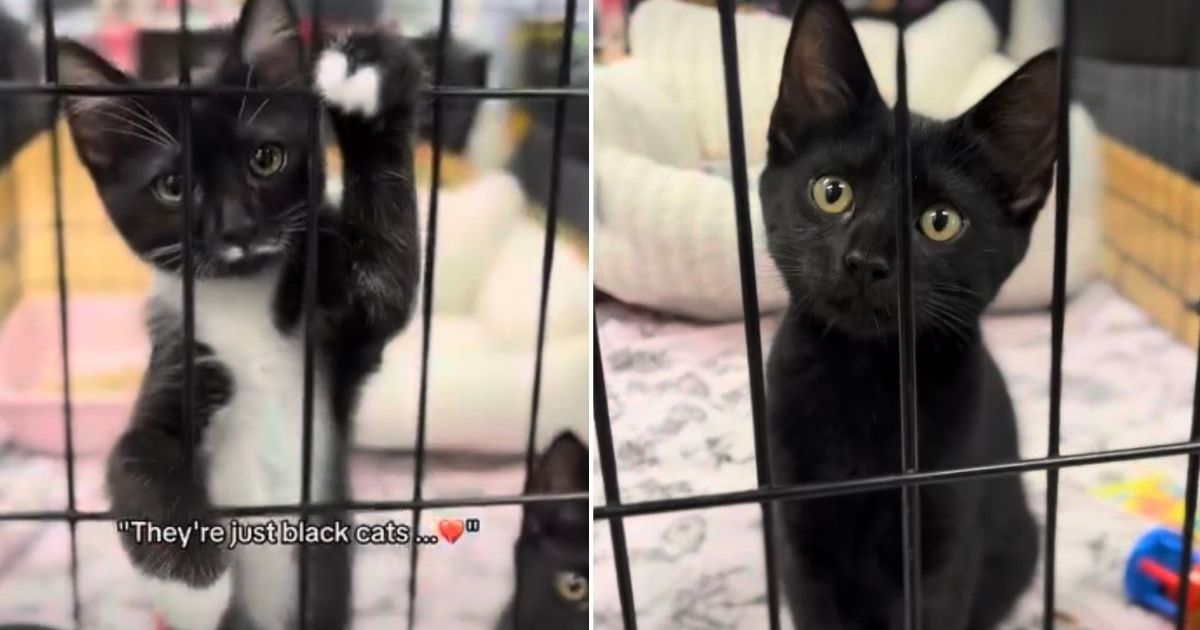
Black cats Chloe and Penny have spent months in shelter care waiting for adoption, passed over repeatedly by potential adopters who overlook them based solely on fur color. The sibling pair represents a widespread problem rescue groups document regularly. Black cats face longer waits for homes than cats of other colors, despite having identical personalities and temperaments to their lighter-colored counterparts.
Rescue organizations across the country report that adoption bias against black cats persists year-round. Potential adopters often favor orange, tabby, or white cats, leaving black felines languishing in shelters longer. This preference has nothing to do with behavior or health. Black cats prove just as affectionate, playful, and loyal as any other domestic cat once placed in homes.
Chloe and Penny's story highlights the real consequences of this bias. Both siblings demonstrate the loving personalities typical of cats bonded since birth. They would thrive in homes where they could stay together, yet adoption inquiries pass them by repeatedly. Staff members and volunteers at their shelter express frustration with the pattern. The cats' only barrier to placement is their striking black coat color.
Rescue groups work actively to combat this prejudice through education and awareness campaigns. They emphasize that fur color has zero correlation with a cat's ability to love and bond with their human family. Some shelters have created special programs highlighting black cats, offering reduced adoption fees or featuring them prominently on social media. These efforts help some black cats find homes faster.
Potential adopters considering black cats gain genuine advantages. Black cats photograph less dramatically than lighter cats, allowing families to focus on personality when choosing pets. They require no special grooming or care different from other domestic cats. Their dark coats hide dirt, making grooming maintenance simpler for busy owners.
Chloe and Penny continue waiting at their shelter. Their story serves as a reminder that adoption decisions should