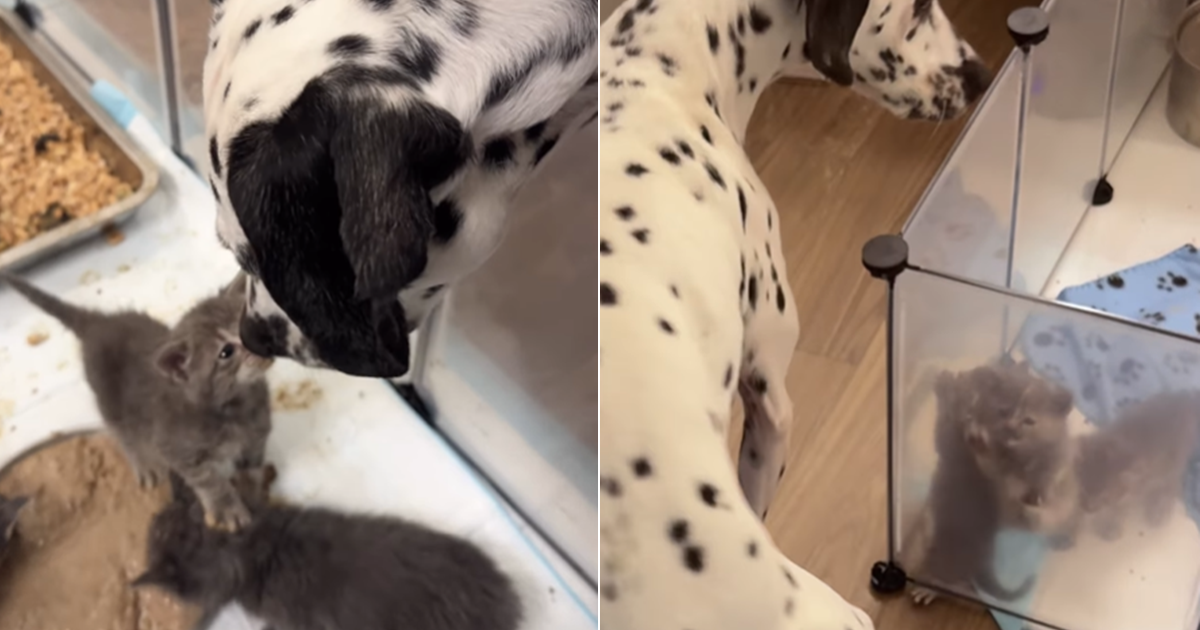
A foster kitten and a large dog have formed an unexpected bond that demonstrates how cross-species friendships develop in animal rescue environments. The kitten waited through the night to reunite with the dog, who serves a maternal role in the kitten's care.
When they finally met, the tiny kitten couldn't contain its excitement. It leaped directly into the dog's arms, capturing a moment of pure affection between two animals of vastly different sizes. The dog accepted the kitten warmly, suggesting prior positive interaction or natural maternal instincts kicking in.
This type of bonding happens regularly in foster homes where animals receive care before adoption. Larger dogs often assume protective and nurturing roles for younger, smaller animals. Kittens benefit from the warmth, comfort, and companionship that dogs provide during vulnerable early weeks of life.
Foster programs rely on these safe introductions to socialize young animals. Kittens exposed to dogs learn not to fear them. Dogs learn to be gentle with fragile creatures. Both species develop confidence that transfers to their future adoptive homes.
The kitten's enthusiastic leap shows trust. Foster dogs receive training and screening to ensure they have calm temperaments around cats. Behavioral compatibility matters for successful multi-pet households after adoption.
Such heartwarming moments also serve foster programs well. Photos and videos of bonding animals encourage potential adopters to open their homes. When people see a dog and kitten playing peacefully together, they envision that harmony in their own families.
This particular foster success story highlights why many rescue organizations prioritize matching animals before adoption. A dog and kitten that already have a relationship transition together to their permanent home. This reduces stress for both animals and increases adoption success rates.
Foster homes save lives. Shelters reach capacity quickly, but foster networks expand capacity without the overhead. Animals in foster care receive individualized attention, behavioral