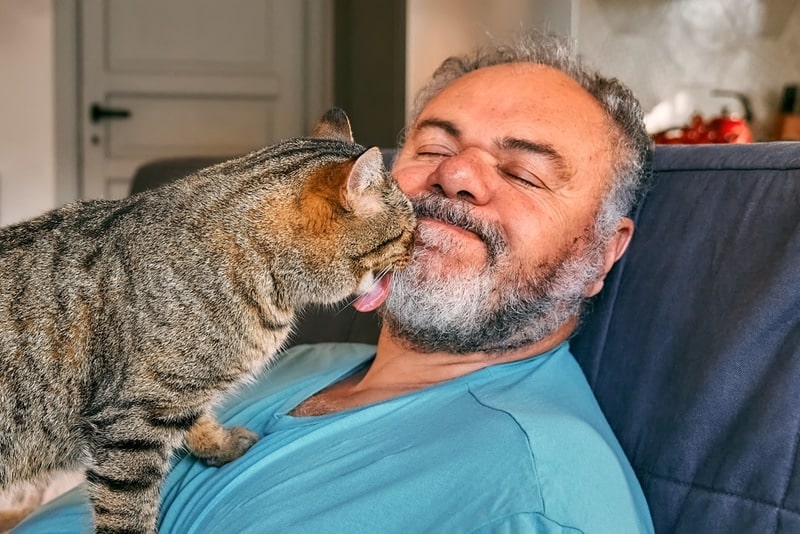
Cats ignore personal boundaries for good reasons. When your cat invades your space, rubs against your face, or sits directly on your keyboard, that behavior signals trust and affection, not rudeness.
Cats lack the concept of personal boundaries that humans value. They navigate their world through scent marking, proximity, and physical contact. When a cat rubs its face on you, it deposits pheromones from glands on its head. This marks you as part of its family group and territory. The behavior says "you belong to me" in cat language.
Close contact also serves practical purposes. Cats are vulnerable when sleeping or relaxing. A cat that plops down on your lap or follows you into the bathroom chooses to be near you because it feels safe. This trust matters. A cat with anxiety or fear avoids people entirely. One that shadows you from room to room displays confidence in your protection.
Facial rubbing carries particular weight. Your cat's cheeks contain scent glands that release calming pheromones. When your cat rubs its face on yours, it's not just marking you. It's also sharing those calming chemicals with you. Some research suggests this behavior lowers stress in both cat and human.
The boundary violations pet owners find annoying actually reflect a healthy bond. Cats that respect human space may simply lack attachment to their owners. They're not being polite. They're being indifferent.
Understanding this shift perspective. The cat sitting on your papers during work isn't trying to disrupt you. It's seeking warmth, proximity, and your company. The cat that weaves between your ankles while you cook risks injury to stay close. These are signs of a cat that loves you.
Rather than discouraging this behavior, most cat experts recommend accepting it. Set reasonable boundaries where safety matters, like staying off cooking surfaces. For everything else, let